


Modular Signage Systems South Africa for Franchise Networks
Most franchise networks don't struggle with signage because their signs look bad. They struggle because a sign designed for one site five years ago can't be updated cheaply when the menu changes, the brand gets refreshed, or a new branch opens in a different shopping centre. Modular signage South Africa operators are specifying today is built to avoid that trap. It uses a fixed frame, a repeatable family of components, and graphic inserts that can be swapped without taking the whole sign down. This guide explains how these systems work, where they pay off, and where they don't.
Table of Contents
- Quick Takeaways
- What Modular Signage Means for Franchise Networks
- Why Fixed Signage Breaks Down at Scale
- Designing a Signage Family That Works Across Sites
- Component Breakdown: Frames, Inserts, and Faces
- Comparing Modular, Fixed, and Rebuild Approaches
- Rollout Planning Across Gauteng and Beyond
- Franchise Agreement Obligations That Affect Signage
- Maintenance, Replacement Cycles, and Brand Control
- Frequently Asked Questions
- References
Quick Takeaways
| Key Insight | Explanation |
|---|---|
| Design for the first update, not the opening day | Promotional graphics, rebrands, and department or trading-name changes arrive within a few years for most branches. Specify replaceable inserts from the start. |
| Lock the profile, vary the face | Keep the frame, brackets, and illumination spec identical at every site so any replacement insert fits any branch. |
| Put the sign family into the operations manual | Tie approved profiles, colours, fonts, and installer standards to the manual so franchisees order from one list instead of sourcing their own. |
| Budget for the second and third change | Compare providers on cost per replacement cycle, not only the first-install quote. Replacement labour is where fixed signs quietly become expensive. |
| Match the sign type to the trading environment | Illuminated modules suit evening retail, restaurants, and fitness centres. Lower-profile architectural signs suit corporate offices and hotel lobbies. |
| Check the agreement before rolling out | Confirm who pays for signage changes, how much notice the franchisor must give, and whether the cost belongs in the disclosure document before anyone signs. |
What Modular Signage Means for Franchise Networks
A modular signage system is a family of sign parts built to one standard. It usually includes a repeatable frame or cabinet profile, common fixings, and graphic panels or letter modules that slot into that profile. The network approves the system once, and every site draws from the same parts. Instead of commissioning a bespoke sign each time a branch opens, the franchisor controls the specification.
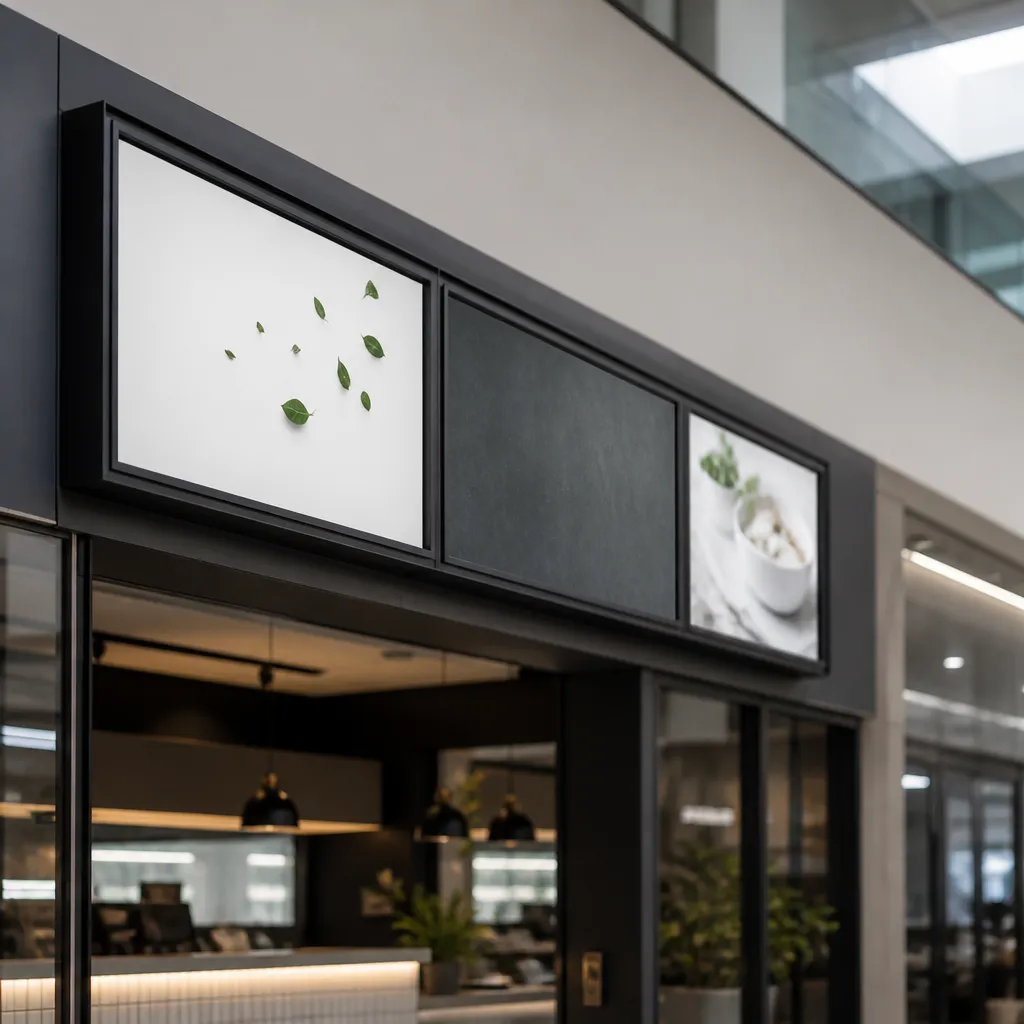
The difference shows up at the first change. A fixed sign that needs a new logo means fabrication, a site visit, and often removal of the old unit. A modular sign needs a new insert and a technician who knows the profile, and the job is usually a short visit rather than a rebuild.
In practice, the systems that hold up best are designed around the three changes franchisors make most often: promotional graphics, branding refreshes, and location details such as trading hours, store names, or department labels. If a system can't handle all three without a new structure, it's a fixed sign with a modular label.
Where the Up-Front Cost Sits
A modular system does not mean cheap signage. It costs more to design and specify at the start because the profile, tolerances, and fixing points have to work for every future insert, not just the one on the drawing. Franchisors who choose it purely on the first quote usually end up paying for a second round of approvals and a redesign.
Pro tip: Ask for the replacement insert drawing and the fixing detail before you sign off the first sign. If the supplier cannot show you both, the system is not modular in any useful sense.
Why Fixed Signage Breaks Down at Scale
A single store with one fixed sign is a manageable cost. Ten or twenty branches with fixed signs become a maintenance programme, and the cost compounds every time the brand moves. The problem is rarely the sign on day one. It is the sign on day nine hundred, when the network needs to change one line of copy across forty sites.
The Cost of the Second Rebrand
Most networks underestimate how often they will change their signage. A typical sequence looks like this: a seasonal promotion, a new service line, a colour refresh, and then a full rebrand a few years later. Each one forces a survey of every site, a new quote, and a new installation window that the franchisee has to schedule around trading hours.
When the sign is fixed, each of those events is a full replacement. When the sign is modular, the same events are insert changes. The difference is not dramatic on one store, but across a network it decides whether the marketing team can actually move quickly.
Inconsistent Sites Erode Trust
The second failure is visual. When each franchisee sourced its own sign, the network ends up with five colour versions of the same logo, three fonts, and a mix of illuminated and non-illuminated fascia. Customers notice, even if they cannot explain why one branch looks less credible than the next.
A fixed-sign network also loses control over compliance. Without a shared specification, nobody can say with confidence which sites meet the approved size, illumination level, or placement rules. A modular system makes that check simple, because every site should match the same drawings.
Designing a Signage Family That Works Across Sites
A signage family is more than a shared frame. It is a set of visual rules that every sign type follows, from the main fascia to the directory board inside the lobby. If the rules are loose, the modular parts will still produce a network that looks like several different brands. If they are tight, the system reads as one brand even when the sites are very different.
Start with the parts that never change: the logo proportions, the clear space around it, the corner radius of the cabinet, and the colour values used under different lighting. Those decisions should be made once, documented, and tested on real materials under the light conditions the signs will face. A colour that looks right on a screen often shifts badly under LED backlighting.
Setting One Visual Language
Write the visual language down as a short specification rather than a brand deck. It should name the approved profile, the approved face materials, the approved colour codes, and the maximum number of graphic elements per panel. Franchisees need a document they can hand to a sign contractor without needing a designer in the room.
A network sign is only as consistent as the least-maintained site in the network.
Mixing Sign Types Without Mixing Styles
Wall fascia, projecting signs, pylons, and interior directories all need to share proportions and materials, even though they serve different jobs. A projecting sign should feel like it belongs to the same family as the fascia above the door. The easiest way to achieve that is to share the same frame depth, edge detail, and typeface across every sign type.
Keep the number of approved sign types small. Five well-designed types can cover a standard branch, and each additional type adds another approval path, another installer skill set, and another point where the network can drift.
Component Breakdown: Frames, Inserts, and Faces
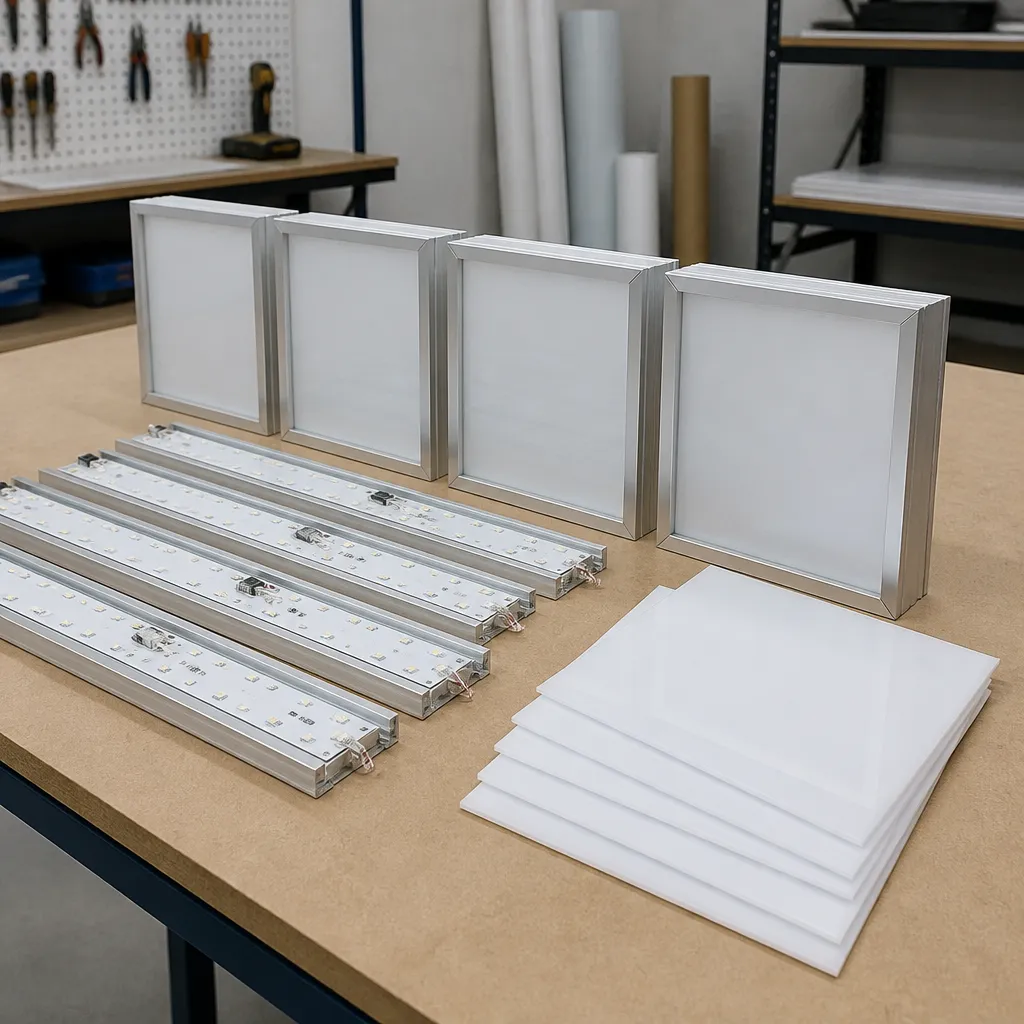
Every modular sign can be broken into three layers: the structure, the insert, and the face. Understanding which layer changes and which stays fixed is the basis for a useful specification. Most failed modular projects misplace the boundary, either locking in too much or leaving the structure open to variation.
Frames and Profiles
The frame is the part that never should change. It carries the weight, holds the fixings, and defines the outer dimensions of the sign family. Specify the profile size, the wall or ceiling fixing method, and the tolerance for alignment on day one. A profile that varies between sites will make every future insert a custom job.
For large pylons and monoliths, the frame also governs how the sign is erected and maintained. Check whether the installer can access the fixings without removing the face, because that single detail determines how much a later change will cost.
Inserts and Graphic Panels
Inserts are the changeable layer. They can be printed graphics on a rigid substrate, acrylic letter modules, or replaceable panels with a standard edge detail. The rule is simple: an insert should be removable by one trained technician in a short visit, without special tools or structural work.
Print-based inserts suit promotional changes and short-term campaigns. Acrylic or dimensional modules suit permanent copy such as trading names and logos. Mixing both in one sign family is normal, provided both formats use the same mounting pattern.
Illumination Choices
LED backlighting is the most common choice for retail and hospitality sites in Gauteng, because evening trading makes visibility a real concern. Front-lit and halo-lit options suit offices and hotel frontages, where a softer look fits the setting better. The illumination method should be part of the approved specification, not a decision each franchisee makes alone.
Pro tip: Ask the supplier to test a replacement insert on the actual frame at the actual site before the rollout. Panels that fit on the bench often need a few millimetres of adjustment once the fixings are in a real wall.
Comparing Modular, Fixed, and Rebuild Approaches
Franchise networks usually end up choosing between three approaches. Each one has a place, and the mistake is applying the wrong one to the wrong part of the network. The table below sets out where each approach works and where it fails in a typical multi-site rollout.
| Approach | Where It Works | Where It Fails |
|---|---|---|
| Modular signage system | Networks with frequent promotional changes, shared branding, and sites that need the same look with different copy. | Single flagship sites with a unique architectural brief, where the sign has to be a one-off landmark. |
| Fixed bespoke signage per site | Flagship stores, heritage buildings, and sites where the sign is part of the architecture and will not change for many years. | Growing networks, because every change becomes a full fabrication and installation job at each branch. |
| Hybrid: modular family with one fixed hero sign | Mid-sized networks that want a distinctive main sign on the building and a modular system for secondary signs, directories, and window graphics. | Networks that cannot agree on which sign is the hero, which usually leads to an expensive fixed sign and a modular system nobody maintains. |
In our experience, the hybrid model is the most practical for networks with mixed site types. It keeps the brand presence on the building while letting the network update the rest of the signage without a full survey each time. The risk is that the hero sign drifts into a custom project, so the boundary needs to be written into the specification.
Rollout Planning Across Gauteng and Beyond
A modular system only pays off if the rollout is planned properly. The first site sets the pattern, and every later site inherits its decisions about fixings, cable routes, and mounting heights. Rushing the first installation to meet an opening date usually costs more later than it saves now.
Site Surveys Before Specification
Survey each site before the specification is finalised. Measure the mounting surfaces, check the structural condition of the wall or canopy, and note the electrical supply and its distance from the sign position. Gauteng shopping centres, high street frontages, and standalone buildings each present different constraints, and a single standard drawing rarely fits all of them without adjustment.
Record the survey in the same format for every site. That record becomes the baseline for future changes, and it is the fastest way to find out which branches need extra work before the next installation window.
Phasing a Network Rollout
Roll out in phases rather than all at once. Start with a pilot group of three to five sites that represent the range of conditions in the network, such as a mall branch, a street-front branch, and an office-based branch. Use the pilot to refine the specification, the installer checklist, and the approval process before the rest of the network follows.
Once the pilot is signed off, group the remaining sites by trading environment and installation window. Schedule installations outside peak trading hours where possible, and agree access times with each franchisee in writing so no one loses a weekend of visibility.
Franchise Agreement Obligations That Affect Signage
Signage is rarely treated as a legal issue until a franchisee disputes the cost of a change. Before a network commits to a modular system, the contract and disclosure obligations should be reviewed by a South African franchise lawyer. The points below are a starting checklist, not legal advice.

A practice guide on South African franchising notes that there are no separate registration requirements for franchise systems, but disclosure obligations still apply. A franchisor must provide a franchise disclosure document at least 14 days before the franchise agreement is signed. If the signage specification affects the franchisee's capital cost, it should be disclosed in that document, not introduced after signing.
The 14-Day Disclosure Window
Treat the signage specification as part of the franchise offer. If the network requires a specific modular system, the approved suppliers, the typical cost per site, and the replacement policy should be visible to a prospective franchisee before the 14-day period starts. Surprises at the signing stage create disputes that are far more expensive than the signs themselves.
Regulation 2 and Agreement Content
A South African franchise regulation summary points to Regulation 2 of the Consumer Protection Act regulations as setting out further information that must be included in a franchise agreement. Signage provisions are not usually listed there by name, but cost-sharing, approval rights, and maintenance responsibilities should be written clearly into the agreement. Ambiguity on who pays for a replacement insert is one of the most common sources of friction between franchisor and franchisee.
Maintenance, Replacement Cycles, and Brand Control
A modular system is only as good as the process that keeps it consistent after installation. Without a maintenance schedule and clear ownership of changes, the network drifts back toward the mixed look it was meant to fix. The work is not glamorous, but it is where most of the long-term value is decided.
Building a Replacement Schedule
Set a replacement schedule for each sign type based on how it is used. Illuminated faces need checks for LED failure, discolouration, and water ingress. Printed inserts need checks for fading and edge lifting, especially on exposed frontages. Put the schedule in the operations manual and assign responsibility for each check, whether to the franchisee, the franchisor, or an approved maintenance contractor.
Track every replacement in a single register. The register should record the site, the sign type, the insert version, the date, and the installer. After two or three years, that register shows which sites are drifting and which insert materials last longest in real conditions.
Keeping the Approved Specification Current
The approved specification will change as materials, lighting technology, and brand guidelines change. Assign one person to own the specification and review it at least once a year. When the specification changes, decide whether existing signs are upgraded, grandfathered, or replaced at the next scheduled change, and communicate that decision to every franchisee in writing.
Pro tip: Keep one physical sample of each approved insert and profile at head office. When a franchisee sends a photo of a sign that looks wrong, you can compare it against the sample in minutes instead of guessing from a screen.
Frequently Asked Questions
How is modular signage different from a standard fascia sign?
A standard fascia sign is usually built as a single unit for one location and one design. Modular signage separates the structure from the graphic layer, so the frame stays in place while inserts are changed for new campaigns, branding updates, or site-specific details.
Is modular signage suitable for a small franchise with only a few branches?
It can be, but the benefit grows with the number of sites and the frequency of changes. For a network of two or three branches with a stable brand and no plans to expand, a fixed sign may be the more economical choice. Once the network plans to add branches or change its promotions regularly, the modular approach starts to pay off.
Can modular signs be illuminated?
Yes. LED backlit and front-lit modules are common in retail, hospitality, and fitness settings. The illumination method should be part of the approved specification so that every site uses compatible components and the replacement inserts fit the same frame.
Who should pay for signage changes under a franchise agreement?
The agreement should answer that question explicitly. Common approaches include the franchisor paying for brand-wide changes, the franchisee paying for site-specific repairs, and both parties sharing the cost of major rebrands. Whatever the split, it should be disclosed before signing and reviewed with a franchise lawyer.
How often should a franchise network review its signage specification?
Review the specification at least once a year, and after any major brand change or material update. A short annual review keeps the approved list current, prevents franchisees from sourcing outdated components, and gives the network a clear record of what each site is meant to look like.
Have you managed signage across several branches or a franchise network? Share the approach that worked best for you, or the change that caused the most trouble, in the comments.