


Game Lodge Signage in South Africa: Brand and Nature
Good game lodge signage in South Africa is hardly noticed. A carved timber name board at the gate, a discreet metal plate at the entrance to the main lodge, and a directional arrow that reads clearly from a game vehicle at dusk. Getting there takes deliberate choices. Many lodges spend heavily on suites and game drives, then bolt on glossy vinyl, backlit boxes or generic fascia signs that fight the bush. This guide explains how to plan signage that keeps the brand sharp while the landscape stays in charge.
Table of Contents
- Quick Takeaways
- Why Game Lodge Signage Has a Different Job
- Materials and Colour Palettes That Belong in the Bush
- Conservation Messaging Without Greenwashing
- Wayfinding for Guests and Game Vehicles
- Working Within Park Rules and Access Control
- Comparing Three Signage Approaches for Lodges
- Rental and Seasonal Signage for Resorts
- Frequently Asked Questions
- References
Quick Takeaways
| Key Insight | Explanation |
|---|---|
| Design for the arrival sequence | Plan signs at the public road, the parking or drop-off area, and the first building a guest reaches. Each sign should answer one question. |
| Specify materials by service life | Timber, powder-coated steel and stone each suit a specific role. Write the finish and the maintenance cycle into the brief. |
| Test brand colours on site | A palette built for an office tower can look harsh against dry grass. Take physical samples to the property before approval. |
| Replace eco slogans with named programmes | A named conservation or community project is more credible than the word "eco-friendly" on a board. |
| Light low and sparingly | Low path markers and one restrained illuminated element reduce light spill into the bush. |
| Confirm park sign rules in writing | Check permitted sign types and sizes with the park or reserve authority before design begins. |
Why Game Lodge Signage Has a Different Job
A city shopfront competes with other signs on the same street. A game lodge competes with a sunset and the sound of a hippo in the river. Guests often arrive after a long transfer, tired and looking for the right turn and the right door, not an advertisement. Good lodge signage does three jobs at once: it guides, it identifies the brand, and it stays out of the way.
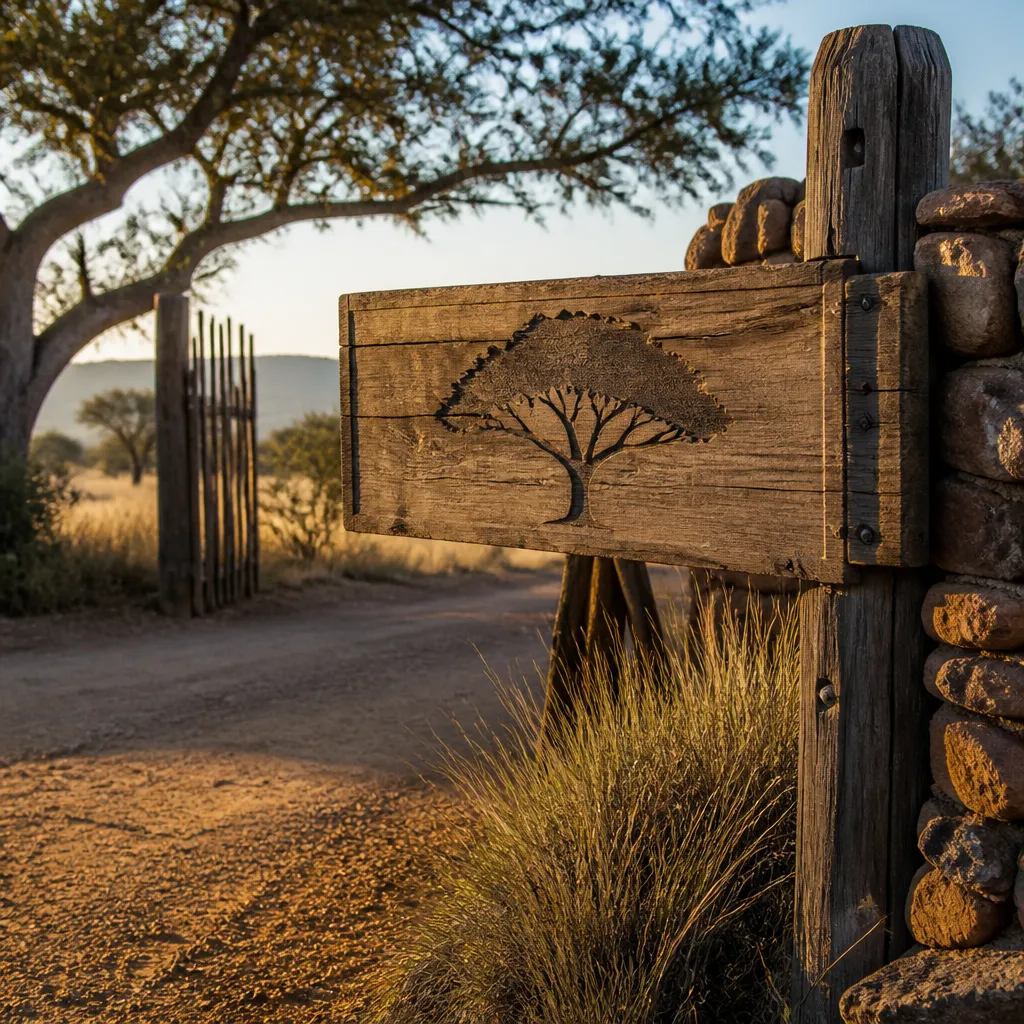
In practice, the brief should start with the property's own story. Londolozi's website explains that its name comes from a Zulu word meaning 'Protector Of All Living Things', and that its conservation ethic shapes how it presents itself. A sign that carries that idea through typography, material and placement reads as part of the place rather than a label attached to it.
Start with the arrival sequence
Map the route a guest actually takes, from the public road to the reception deck. Most lodges have three decision points: the turn off the access road, the parking or drop-off area, and the first building a guest reaches. Each needs a sign that answers one question, such as where do I turn or where do I check in.
If a sign needs more than a few words, it is probably doing two jobs. Split it. Guests read a single line at walking pace far more reliably than a paragraph at the gate.
Know who is reading at speed
Guests on game drives move slowly, but transfer drivers, delivery trucks and staff vehicles do not. A name board should be legible from a vehicle window at a walking pace. Directional signs need enough height and contrast to register from a moving vehicle on a gravel road, where dust and low sun reduce visibility.
A lodge sign that needs a paragraph to explain itself has already failed its first job.
Pro tip: Drive the arrival route in a standard transfer vehicle at dusk before you order anything. Sightlines change completely once the light drops, and that is when many of your signs will actually be read.
Materials and Colour Palettes That Belong in the Bush
Materials decide whether a sign ages well or looks like litter within two seasons. Bush environments are hard on finishes, with dust, heat, strong UV and the occasional elephant leaning on a post. Choose materials with a known outdoor service life and specify them clearly in your brief, not just by appearance.
Timber, powder-coated steel and stone
Hardwood with a proper sealed outdoor finish suits name boards and entrance signs. Powder-coated steel handles directional posts in exposed areas, where wind and sun are constant. Stone or stone-look panels work on a reception wall where the sign is part of the architecture. Untreated timber and standard adhesive vinyl are the two materials we advise lodges to avoid outdoors.
Colour palettes that match the veld
Earth tones, olive greens and muted sand colours usually sit well against the bush. The common mistake is pulling a palette straight from the brand guidelines without testing it on site. A corporate blue that looks crisp on a glass office building can look cold and harsh under bright African light against dry grass. Keep the brand colours, but agree on a tonal version for outdoor use.
Tourism grading criteria for game and nature lodges focus on the condition of materials as much as their look. The minimum requirements document flags damaged furnishings and jarringly uncoordinated styles. Signage faces the same test, because a faded or mismatched sign tells a guest that the property is not looked after.
Conservation Messaging Without Greenwashing
Eco hospitality signage is where many lodges overreach. A sign that claims to be fully sustainable, with no evidence behind it, invites scepticism, and experienced travellers notice. Let the sign state what you do, and keep the proof on your website and in the lodge.
Show the conservation work, not the slogan
A plaque naming a protected area, a conservation partner or a community programme is specific. The word "eco" is not. HVS's article on Africa's game-lodge industry notes that game reserves sustain themselves by balancing tourism revenue with conservation, and sign copy can reflect that balance through concrete programme names rather than adjectives.
Community and heritage messaging
Londolozi's website describes community upliftment, rural education and healthcare work alongside its wildlife management. Signage can point to commitments like these in a few words. A guest-facing board that names a community education programme gives guests a reason to care about the place they are visiting. Keep the copy factual, and confirm the programme is still running before the sign goes up.
Environmental claims that a guest can verify on the property earn trust. Claims that cannot be verified cost credibility at the exact moment you were trying to earn it.
Pro tip: Keep a one-page evidence file for every environmental claim on your signage, with dates and the name of the person responsible. When a guest or a travel writer asks for proof, you can answer in minutes.
Wayfinding for Guests and Game Vehicles
Wayfinding in a lodge serves two audiences that rarely want the same thing. Guests want calm, unobtrusive direction. Drivers, guides and staff need signs that work in dust, rain and low light. Plan for both groups from the first sketch.
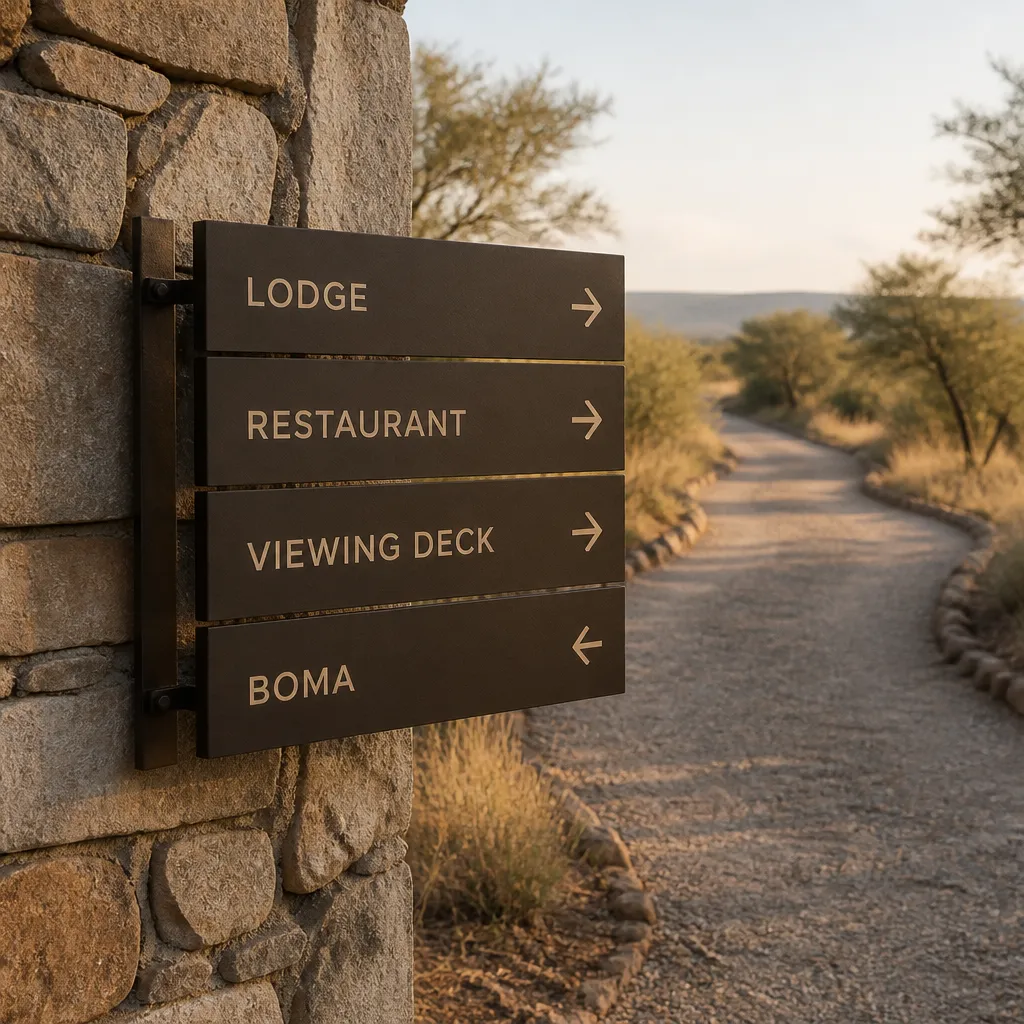
Directional signs at junctions
Use one sign per junction, mounted at a height that clears a vehicle bonnet and sits within the driver's line of sight. Show the destination and the arrow only. Keep the lettering large and high contrast, because a dusty windscreen and fading light will defeat anything small.
Lighting unit paths without disturbing the bush
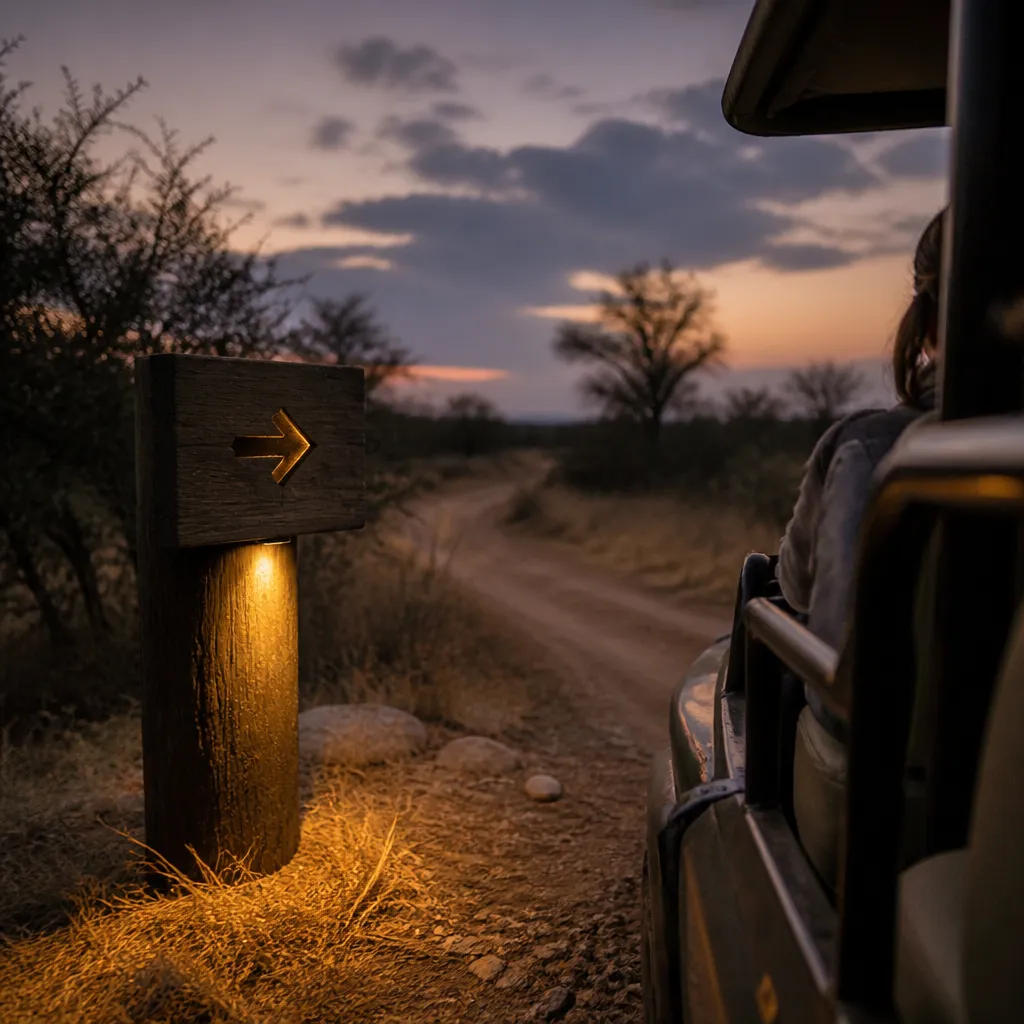
Tented units and suites need identification that works at night without flooding the area with light. Low-level path markers reduce light spill and help guests find their way without bright fittings on tall posts. This is usually the best place to spend a lighting budget, because bright, high-level lights facing the bush draw attention to the lodge and away from the animals guests came to see.
Keep the number of sign types small. Three or four families of signs, built from the same materials and colours, look intentional. Ten variations look like something was added every time a manager had a new idea.
Working Within Park Rules and Access Control
Many lodges sit inside protected areas, where signage is governed by park authorities as well as by the lodge's own brand standards. Check the rules before you design. A sign that has to be removed after installation costs more than the sign itself, and it damages the relationship with the authority you depend on.
What the SANParks guide shows
SANParks' directional signage guide is a useful reference for how access is communicated inside national parks. Its annexure includes entries for private lodges and tented camps, and it states that no unauthorised vehicles are allowed. For operators, the practical lesson is that your signs should direct authorised guests and vehicles, not invite general traffic onto private tracks.
Access and reservation messaging
Signs at a gate or boom should tell the visitor what to do in one line, with a reservation instruction or contact number where relevant. Do not leave guests guessing whether they are allowed to turn in. A second sign near the gate that repeats the reservation reminder prevents wasted trips on the access road.
Pro tip: Send draft sign sizes and wording to the park or reserve authority early, and ask for written confirmation of which sign types they accept. Verbal approval during a site visit is not enough when a sign goes up and someone questions it.
Comparing Three Signage Approaches for Lodges
Three approaches come up most often when lodges plan their signage. Each suits a different kind of property, and each carries a different maintenance burden. The table below compares them on the criteria that matter most in the bush.
| Approach | Best suited for | Main trade-off |
|---|---|---|
| Hand-finished timber with routed lettering | Boutique lodges with a strong rustic identity and a small number of entrances | Needs periodic refinishing, and it shows wear faster on dusty or exposed sites |
| Powder-coated steel with cut-out lettering | Larger properties with many directional signs and tighter budgets | Lower warmth, and it can look industrial if the colour is chosen without testing on site |
| Restrained illuminated fascia or entrance sign | Main reception or building identification that guests need to find after dark | Risk of light spill into bush areas, so dimming and placement need careful control |
In practice, most resorts combine two approaches. Timber carries the identity at the gate, steel handles directional signs on access roads, and a restrained lit element appears only at the main building. Mixing approaches works when the colours, typefaces and logo placement follow one set of rules.
Rental and Seasonal Signage for Resorts
Not every resort needs permanent signage for every season. Weddings, seasonal promotions and conference periods create short-term demand. Rental signage lets a property present a clean, on-brand look without committing capital to a sign that will be out of date within months. SignShopper offers signage rental solutions across Africa, which suits this kind of short-term need.
When rental makes sense
Rental works well for seasonal campaigns, opening events, special-interest weeks and properties testing a new brand direction before committing to permanent fabrication. It also suits remote locations where a permanent installation is impractical to plan around a busy guest calendar. Agree on the exact dates the sign is needed before the order is placed.
Keeping brand consistency across properties
Multi-property groups need one rulebook applied at every site. Lodges in different locations will have different terrain, but logo placement, typeface and colour codes should match. Corporate identity discipline matters more across a group than at a single site, because guests compare properties from the same brand directly.
When a rental sign is installed, record the removal date and hold the supplier and the lodge team to it. A faded banner left out in the veld for a season can undo everything the permanent signage achieved.
Frequently Asked Questions
What is the best material for game lodge signage in South Africa?
Sealed hardwood works well for name boards and entrance signs, while powder-coated steel suits directional posts in exposed areas. Avoid untreated timber and standard adhesive vinyl outdoors, because both age quickly in sun and dust.
Do game lodges need permission to install signs inside protected areas?
In most cases, yes. Check the rules of the park or reserve authority before you start the design, and get written confirmation of the permitted sign types and sizes.
How can an eco lodge avoid greenwashing on its signs?
Name specific programmes and keep dated evidence on file for every claim. Avoid vague statements such as "fully sustainable" that a guest cannot verify on the property.
Should lodge signage use lighting?
Use lighting sparingly. Low path markers and one restrained illuminated element at the main building are usually enough. Avoid bright, high-level lights that face bush areas.
Can SignShopper help with signage for multi-property resort groups?
Yes. SignShopper works on signage for corporate clients and franchises, with strict attention to corporate identity standards, so a group can keep logo use consistent across properties. The business also offers signage rental across Africa for seasonal and event needs.
Tell us in the comments what surprised you most about signage at your lodge, reserve or resort once it was installed.
We would love your feedback and any insights you would share with others. What perspective would you add?