


Fabric Signage South Africa: Why Textile Displays Win
Walk through a major exhibition hall in Gauteng today and one thing stands out: the heavy rigid panels that once dominated the back walls have been replaced by tension frames, printed stretch fabric and backlit textile walls. Fabric signage South Africa exhibitors now specify is no longer a niche choice. For corporate clients, franchise networks and venue managers who pack, ship, assemble and reuse displays every year, it has become the practical default. This article explains why textile displays are winning floor space, where they still fall short, and how to specify them so they survive a real show schedule.
Table of Contents
- Quick Takeaways
- Why Exhibition Halls Are Switching to Fabric
- How Tension Fabric Systems Work
- Freight, Storage and Handling Costs
- Colour, Light and Backlit Fabric
- Specifying Fabric Signage in Gauteng
- Choosing the Right Display Format
- Renting Versus Buying Textile Displays
- Maintenance, Lifespan and Sustainability
- Frequently Asked Questions
- References
Quick Takeaways
| Key Insight | Explanation |
|---|---|
| Fabric wins on freight | A tension frame system folds into a soft case, so you pay for fewer crates and less vehicle space on every move between venues. |
| Get flame-retardant documentation first | Request the test certificate for the specific fabric batch before artwork is approved, because a venue can refuse a display that lacks it. |
| Design for the frame, not the flat file | Keep logos and key copy well clear of seams and edges, since stretched fabric pulls the edges and hides detail near the frame. |
| Choose matte finishes under hall lighting | Matte textile reduces the glare that washes out a graphic on glossy board when track lights or spotlights hit it from the wrong angle. |
| Budget for a second fabric face | Replacing only the printed face for a new campaign costs far less than rebuilding the whole stand, so specify the frame for longevity. |
| Approve colour on the real fabric | Screen colour does not match dye-sublimated polyester, so ask for a colour proof printed on the actual fabric before the full run. |
Why Exhibition Halls Are Switching to Fabric
The shift did not happen because fabric looks better in a brochure. It happened because the economics of a display changed. A rigid panel wall needs a frame, a skin, hardware and a crew to assemble it, and every one of those items has to be moved, stored and returned.
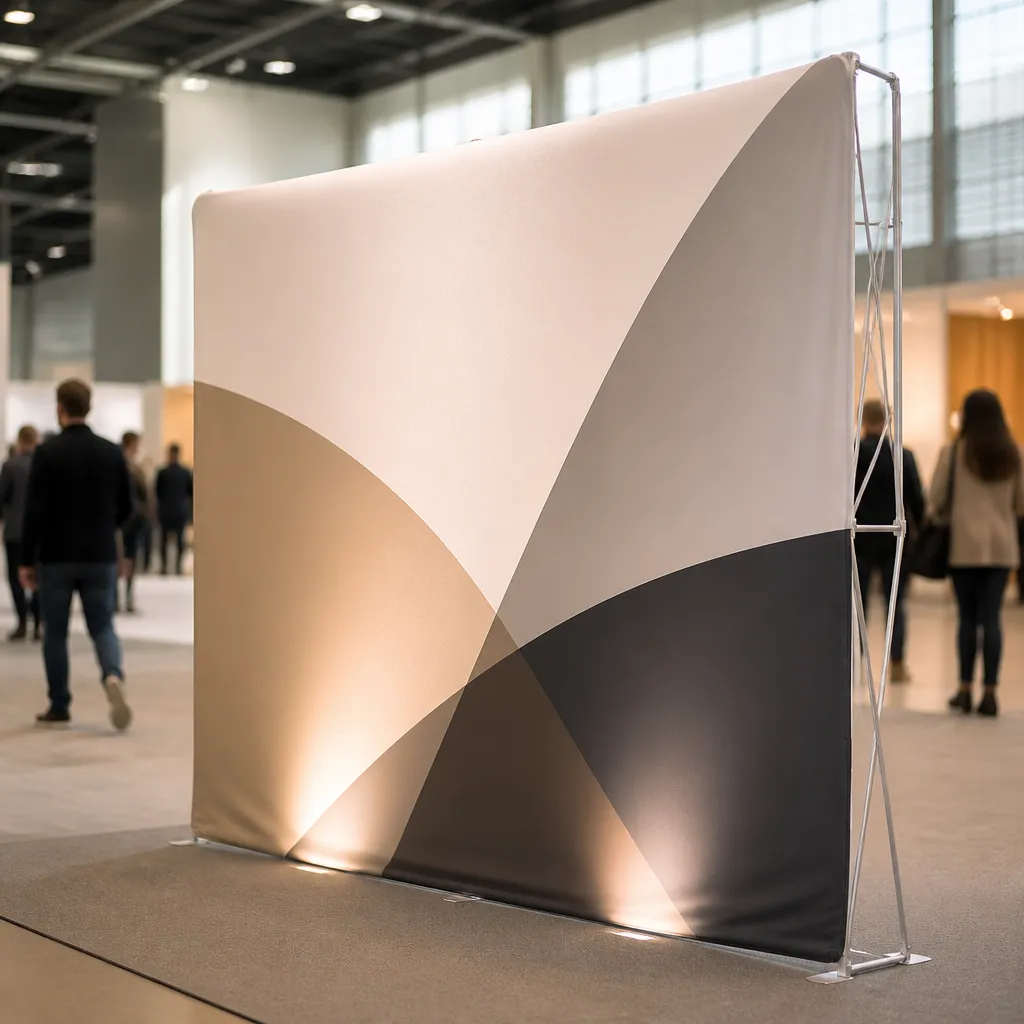
Market researchers are noticing the same trend. One industry outlook puts the global fabric signage market at USD 41.86 billion in 2025, growing at a compound annual rate of about 2.01 percent, and names event branding and decoration among its core applications. Treat those figures as a directional signal rather than a precise forecast, but note that steady growth points to more suppliers and more exhibitors choosing this format.
The weight problem with hard panels
A typical rigid back wall is heavy enough that freight costs can quickly outweigh the artwork. In practice, the first thing a show manager asks about a display is not how it looks but how many crates it needs and who will carry it up the ramp. Fabric answers both questions faster.
One vendor comparison guide claims that tension fabric can be up to 75 percent lighter than traditional alternatives. Check that figure against your own specifications, but it explains why exhibitors who pay for every kilogram are moving across.
What a stand designer actually wants
Designers want surfaces that stay flat without sagging, can be printed edge to edge, and do not need a glass or plastic cover. Textile gives them a seamless graphic that looks finished from a distance. It also allows soft folds and gentle curves that rigid sheets cannot manage without expensive fabrication.
Pro tip: Ask your designer to draw the frame into the artwork file before printing starts. A graphic that works on a flat screen can lose a logo into a corner seam once the fabric is stretched.
How Tension Fabric Systems Work
Frame types and assembly
Most tension fabric systems use an aluminium frame with a channel or zip edge. The printed fabric slides or zips onto the frame, and the tension keeps it flat. Setup is usually a matter of seating the fabric in the channel and squaring the frame, which a small crew can do without specialist tools.
Ask the supplier how the frame joins to the base and whether any parts need a tool. A system that needs three people and a drill on every changeover will eat the time you thought you were saving.
Print methods that hold up under handling
Most textile graphics are dye-sublimated onto polyester, which bonds the ink into the fibre rather than sitting on top of it. That matters when a panel is rolled, folded and unrolled many times over a season. Ask your supplier which process they use and what the fabric weight is, because a light stretch fabric looks excellent but can show wrinkles on a large frame.
Lightweight fabric is also more prone to sagging when it is left stretched in a hot hall. Heavier fabric holds its shape better, but it costs more to ship. Decide which matters more for the specific display before you sign off the spec.
Changeovers without rebuilding the stand
The real advantage for a corporate client with a standing presence at several venues is the changeover. You keep the frame, swap the fabric face and reuse the lighting. Franchise groups use the same system for regional promotions, so the brand look stays consistent without a new production run for each location.
Freight, Storage and Handling Costs
Packing density and crate count
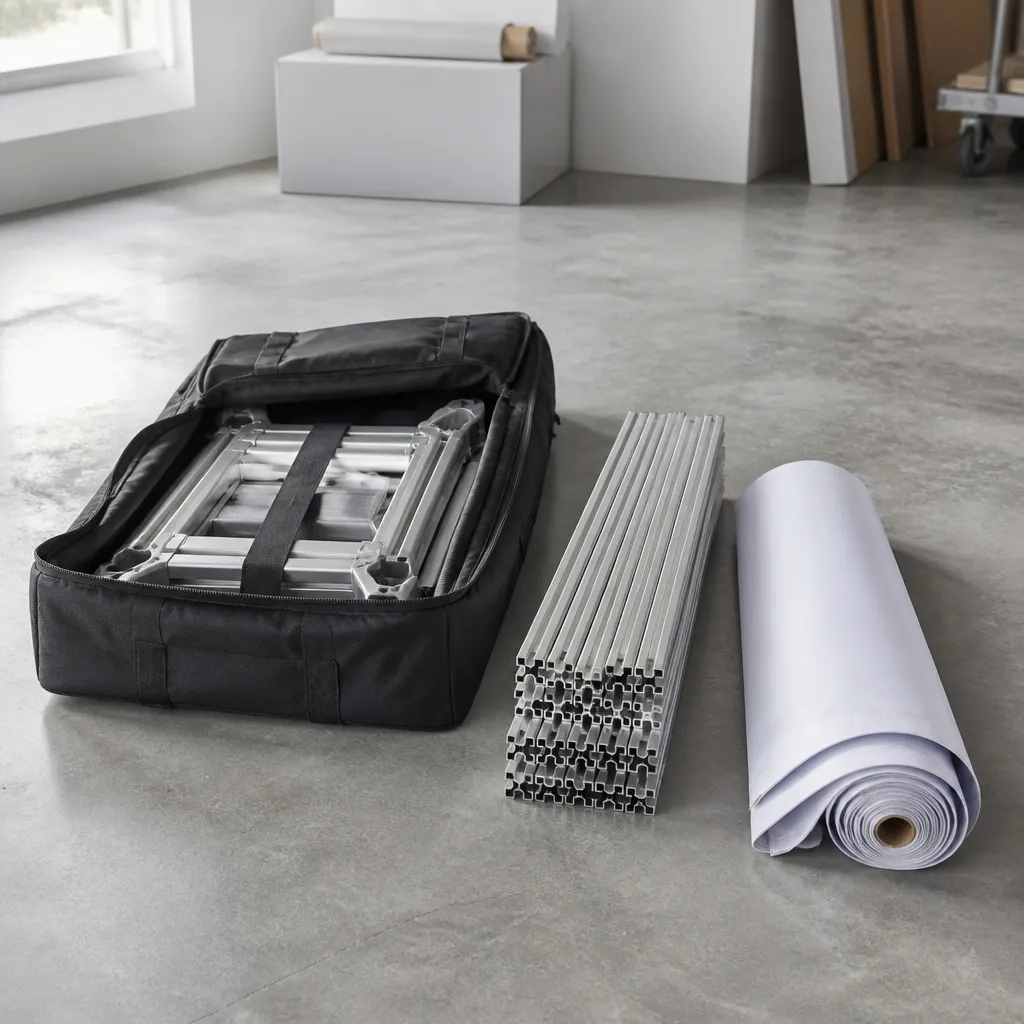
Fabric panels roll or fold into soft cases, which means a display can fit into a standard vehicle load with room to spare. Rigid systems need crates with internal padding, and every crate becomes a line item at the loading dock and again on the return trip. Count your crates before you approve a design, because that number drives freight cost more than the square metres of artwork.
Storage between events
Storage is where fabric quietly wins for venue managers and franchise head offices. A stored textile system takes up a shelf rather than a warehouse bay. Keep the fabric in its case, away from damp floors, because moisture and heat cause prints to shift and can affect the finish on the frame.
Where the savings stop
Fabric is not free to move. Large, custom-engineered frames still need proper protection, and a poorly packed print can arrive scuffed. The saving is real on most projects, but it depends on how well the case and frame were designed, so ask for packed dimensions and weight in writing before you compare quotes.
The display that costs least to move is the one that does not need a second crew to set up. Freight savings only count if the display goes up on time.
Colour, Light and Backlit Fabric
What the big shows showed about colour
EuroShop, the retail trade fair held every three years in Düsseldorf, drew 81,000 visitors from 141 countries in 2023, with 1,830 exhibitors across 15 halls. Coverage of that show noted a clear move away from the dominant monochrome palettes of earlier years toward bolder, more colourful stands. That direction suits fabric well, because large dye-sublimated graphics carry saturated colour across a wide area in one piece with no joins to break the image.
Backlighting and semi-transparent layers
The same coverage described extensive backlighting that made graphics pop, along with stands that paired semi-transparent structures with lighting to create an extra visual layer. Fabric handles this well because light passes through a translucent textile and renders the print evenly. A backlit textile wall often looks more uniform than a rigid lightbox with hot spots at the corners.
Pro tip: Test backlit fabric on site with the hall lights at full brightness before the show opens. Lighting in a converted venue rarely matches the studio lighting used in a supplier's showroom.
Glare and the matte finish advantage
A glossy board can wash out the moment a spotlight hits it from the wrong angle. Matte textile removes much of that problem, and one banner supplier's comparison guide makes the same point about the matte look of fabric. Ask for a matte finish on any panel that sits within the sightline of a major spotlight.
Specifying Fabric Signage in Gauteng
Fire ratings and venue approval
Before any artwork goes to print, confirm that the fabric meets the flame-retardant requirements of the venue and the event organiser. Request the test certificate for the specific fabric batch, not a general claim in a brochure. A display refused at the gate costs far more than a premium fabric would have.
Keep a copy of the certificate in the project file. Venue managers change, and a display that was approved for one event can be questioned at the next.
Indoor and outdoor use are different jobs
Most exhibition work happens indoors, but many activations move between hall interiors and outdoor forecourts. Fabric handles indoor conditions well. For outdoor use, specify a heavier fabric, fix the frame to a suitable base, and plan for wind from open doors and passing vehicles. Do not assume an indoor frame will stand up to an open-air activation.
Print resolution and viewing distance
A common mistake is designing at screen resolution and printing at billboard size. Check the viewing distance before you choose the file resolution. A graphic read from two metres needs far less detail than one a visitor reads from a counter.
Set the artwork size from the physical frame dimensions, not from the layout template. Templates often leave out the channel and the margin that the fabric needs to sit properly.
Choosing the Right Display Format
Three formats side by side
No single format wins every job. The right choice depends on how often the display will move and how large the wall needs to be. The table below compares the three options most often considered for exhibitions and corporate events.
| Display Format | Best Use Case | Main Trade-off |
|---|---|---|
| Tension fabric frame | Large walls that travel between venues and get reused across many events | Higher upfront build cost and a need for correct frame specification |
| Roll-up or pop-up banner stand | Small, short-term activations where visitors read the message up close | Limited size and a less substantial look beside larger stands |
| Rigid panel with printed vinyl or laminate | Permanent reception walls where a hard, durable surface matters most | Heavy to freight, costly to store and slow to reconfigure |
Matching the format to the sightline
Tension fabric is the strongest option for large walls that travel. Roll-up banner stands suit smaller, short-term activations where a single visitor reads the message at close range. Rigid panels still make sense for permanent reception walls where durability and a hard surface matter more than packing weight.
A common mistake is buying a banner stand for a space that needs a full wall. Next to a textile system, the stand looks undersized, and visitors walk past it. Match the format to the sightline first, then to the budget.
Renting Versus Buying Textile Displays
When renting makes sense
Renting suits one-off events, pop-up launches and venues that need a display for a single season. You avoid storage costs and the risk that a design goes out of date before it pays back. Rental also lets a franchise group test a regional look before committing to a full production run.
When buying wins
Buying makes sense when the same design will appear at many activations each year, or when the brand standard is locked and changes rarely. Over time, an owned system often costs less per use, provided the fabric face is replaced when it wears. Ask for the cost per event in writing for both options before you decide.
Protecting corporate identity across both
Whichever route you choose, keep colour values, logo clear space and typography locked in a single master file. Rental and purchased systems drift apart quickly when different suppliers print from different versions of the artwork. A controlled master file is the simplest way to keep every location looking identical.
Pro tip: Store the master artwork file alongside the frame specification and a colour reference. When the fabric needs replacing, the new print can match the original without guesswork.
Maintenance, Lifespan and Sustainability
Cleaning without damaging the print
Dust is the biggest enemy of a fabric wall. Use a soft brush or a low-suction vacuum, and avoid harsh solvents, which can lift dye or leave visible marks. Spot clean small stains with a mild solution, test it in a hidden corner first, and let the fabric dry flat before it goes back into its case.
Realistic lifespan and when to replace the face
Fabric graphics wear at the seams, the corners and anywhere the material is repeatedly pulled over the frame. Replace the printed face when colour fades, seams start to fray or the edges lose tension. Replacing only the fabric costs far less than replacing the frame, which is why the frame should be specified for longevity from the start.
Separating sustainability claims from practical facts
Eco-friendly is a common selling point, and the sustainability case for fabric rests partly on packing and reuse. A durable frame and a fabric face that packs small reduce both waste and freight. Be sceptical of blanket claims, though. Ask what the fabric is made from, whether the ink process is documented, and what happens to the face at end of life.
Frequently Asked Questions
Is fabric signage suitable for outdoor use in South Africa?
It can be, but only with the right specification. Choose a heavier fabric, secure the frame to a suitable base, and plan for wind from open doors and passing vehicles. An indoor hall frame is not designed for an open forecourt without changes.
How long does a fabric display last?
A well-built frame can serve many events, while the printed face wears faster at seams and corners. Expect to replace the fabric face before the frame. Track the number of events each display has done so you know when the print has reached the end of its useful life.
Does fabric signage cost more than vinyl or rigid panels?
Not always. A quality tension system can cost more upfront than a basic banner, but freight, storage and labour savings often close the gap over repeated use. Compare the total cost per event rather than the quote for the first build.
What should I check before approving a fabric display for a venue?
Confirm the flame-retardant documentation for the specific fabric, the packed dimensions and weight, the assembly time, and the sightline from the main walkway. Get a colour proof printed on the actual fabric rather than relying on a screen preview.
Can one frame be reused for different campaigns?
Yes. Keep the frame and replace the printed face when the campaign changes. Make sure the new fabric matches the channel size and edge finish, since a mismatch is one of the most common causes of a sagging panel.
Is fabric signage more sustainable than other formats?
It can be, mainly because a durable frame and a light fabric face reduce waste and freight. Check what the fabric is made from and how the ink is applied before accepting any broad sustainability claim.
Tell us which problem you have hit first with textile displays, whether freight, lighting or venue approval, because your experience will shape the next guide we write.