


Building Façade Branding South Africa: A Practical Guide
Drive through almost any business park in Gauteng and you will see the same problem: the building is the sign, but most of its surface says nothing. A blank wall, a tired logo on a fascia and a glazed lobby do little to tell customers who you are. Building façade branding South Africa is moving from a niche idea to a standard brief for head offices, franchise flagships and hospitality venues, because a full-building wrap or cladding system turns square metres of wall into brand real estate. The catch is that sun, hail, coastal salt and municipal rules can ruin a poor choice within a few seasons. This guide covers which options hold up, what they cost per square metre, and where projects usually go wrong.
Table of Contents
- Quick Takeaways
- What Full-Façade Branding Actually Covers
- Materials That Hold Up in South African Weather
- Permits, Fire Ratings and Consent
- Cost Drivers and Budgeting per Square Metre
- Comparing Wrap, ACP Panel and Composite Plank Systems
- Installation Sequence and Corporate Identity Compliance
- Maintenance, Fading and Realistic Lifespan
- Frequently Asked Questions
- References
Quick Takeaways
| Key Insight | Explanation |
|---|---|
| Treat the whole façade as one composition | Plan the artwork on a scaled elevation drawing. Panel joins, window reveals and downpipes break the image, so design around them rather than discovering them on site. |
| Specify the coating, not just the colour | Ask for a fluoropolymer (PVDF) coating on metal panels. Standard polyester finishes lose gloss and colour faster under strong UV and coastal salt. |
| Choose the core to match the fire rating | Mineral-core B1 or A2 panels cost more than standard LDPE core, but they are the realistic choice for multi-storey buildings and anything near a high-occupancy public area. |
| Budget per square metre including access | Scaffolding, hoists, traffic management and after-hours work often cost more than the difference between two panel materials. |
| Get the landlord and municipality involved early | Owner consent and signage approvals can delay a project longer than fabrication does. Start these conversations before the artwork is final. |
| Lock the brand file before anything is printed | Sign off colour references, logo versions and proofs against the corporate identity manual. A wrap that is 5 percent off the brand green is visible from the road. |
What Full-Façade Branding Actually Covers
When clients say they want their building "wrapped," they usually mean one of three different jobs. A printed wrap is a film or vinyl applied over an existing surface. A cladding system is a new layer of panels fixed to the structure, often with a ventilated gap behind it. A signage-integrated façade combines panels with cut-out lettering, backlit elements or illuminated logos. Each one has a different price, lifespan and approval path, so the first decision is which job you are actually paying for.
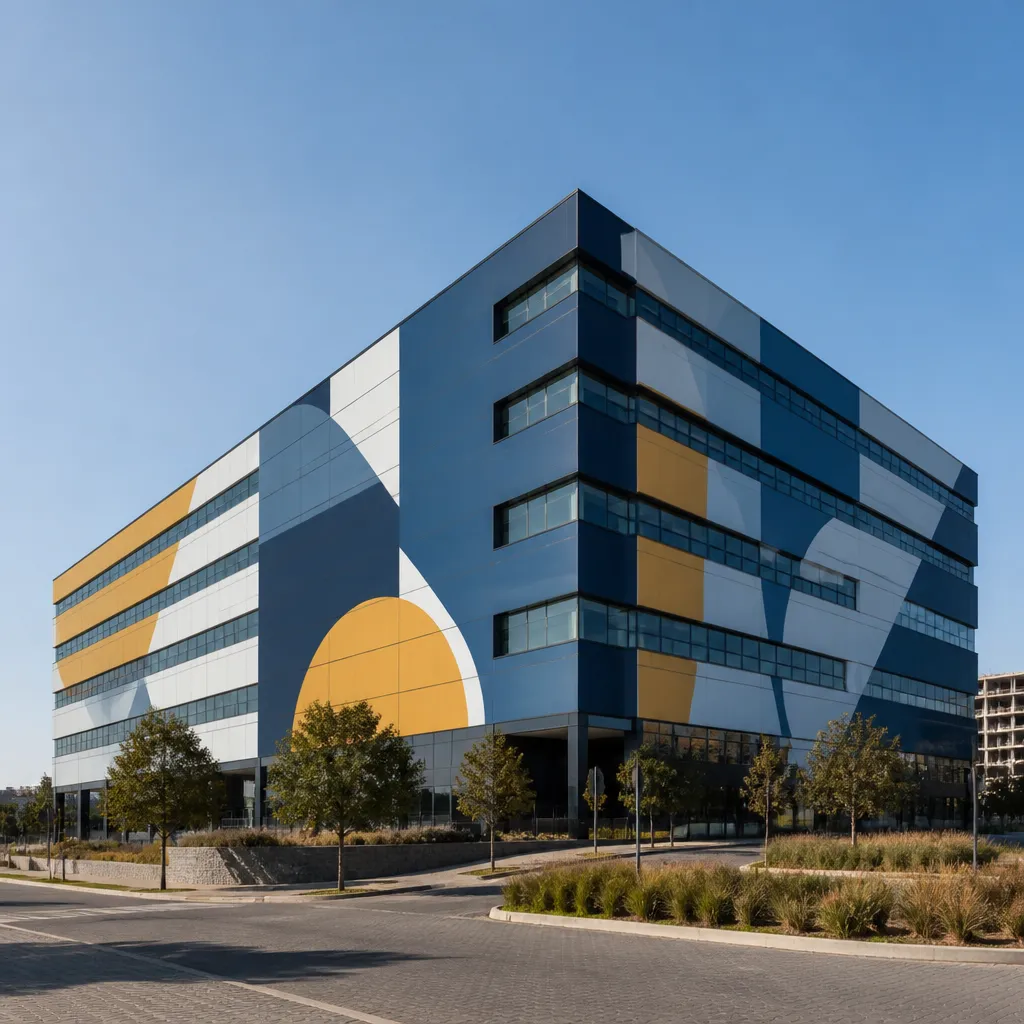
In practice, the mistake we see most often is a brief that asks for a cladding finish but expects a wrap budget. The result is either a rushed film application that peels within a few seasons, or a panel system that the client rejects when the invoice arrives. Be specific about the job before any design work starts.
Wrap, panel and plank: three different jobs
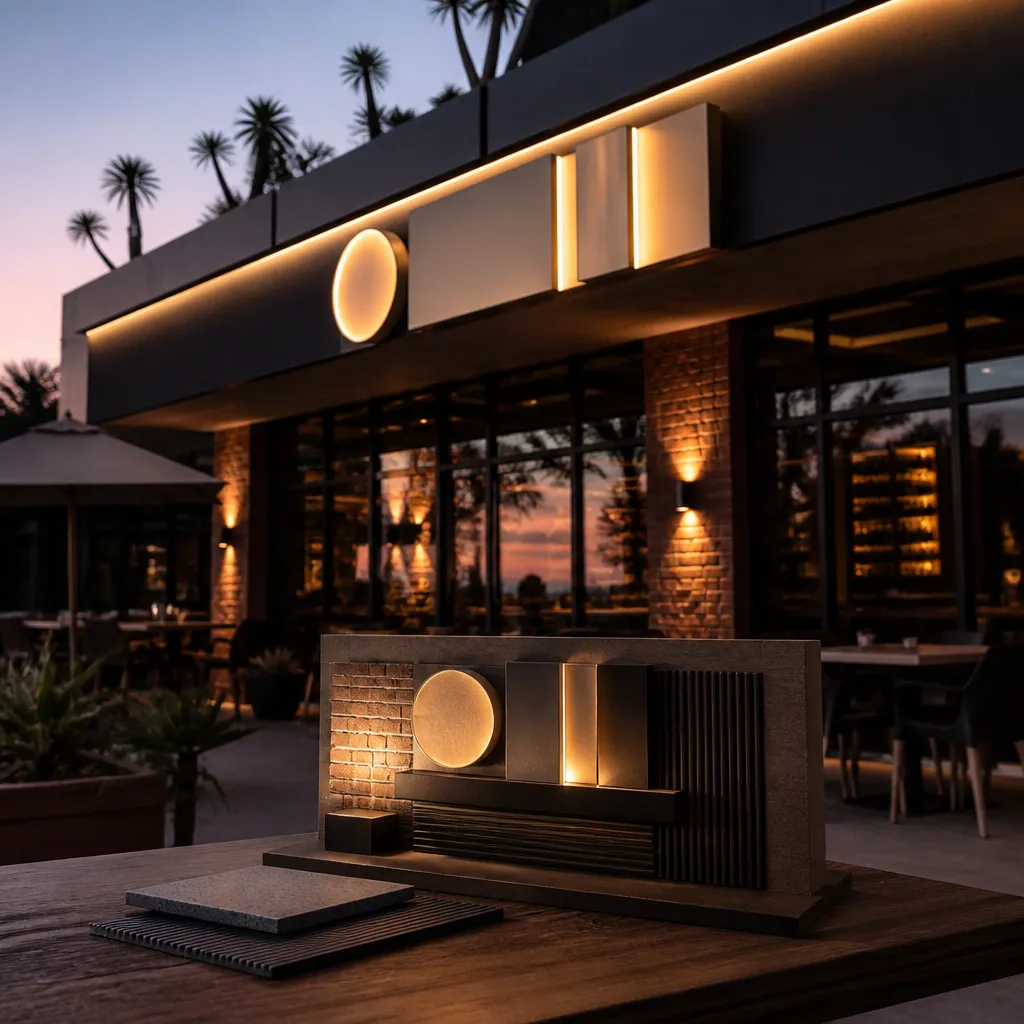
A wrap suits a campaign that needs to change within a few years, or a leased building where the landlord will not allow fixings into the envelope. A panel system suits a head office or flagship that wants a permanent identity. Plank systems in fibre cement or composite suit hospitality and boutique retail, where a warmer, more textured finish matters more than razor-sharp graphics.
Where full-façade branding earns its cost
The strongest case is a building that sits on a busy road, at a junction, or in a mixed-use precinct where customers choose between several similar businesses based on what they see first. A research paper on retail façades available through ResearchGate found that exterior façade design had a significant effect on attracting customers, which matches what franchise owners tell us when they compare footfall before and after a refresh. The return is hardest to prove for offices, and easiest for retail and hospitality.
A building wrap is a brand decision that people see every working day for years. Treat it as a corporate asset with a lifespan, not as a one-off campaign.
Materials That Hold Up in South African Weather
South African façades face a combination that many imported specifications were never written for: high solar load, sharp temperature swings between day and night, and wind-driven rain on coastal sites. Published guidance on local cladding highlights exactly these pressures, along with a common expectation that the façade still looks intentional years after installation. Material choice has to start from that brief, not from a catalogue photo.
The common options are fibre cement, aluminium composite panel (ACP), capped composite, bamboo composite and ASA-based panels. Each solves a different problem. For branded surfaces, the question is usually how flat the panel stays, how well it holds print and cut-outs, and how it behaves when the sun hits it at midday for six months of the year.
Aluminium composite panels for flat, printed graphics
ACP is the workhorse for corporate branding because it stays flat, accepts high-resolution digital print and can be cut for lettering with clean edges. The weak point is the coating. Look for a fluoropolymer (PVDF) finish, and ask the supplier for the coating specification in writing rather than relying on a colour card. Standard polyester finishes are cheaper, but they chalk and shift colour faster on north- and west-facing elevations.
Coatings and UV exposure on exposed elevations
Colour loss is rarely uniform. The elevation that gets the most afternoon sun will fade first, which means a building that looks perfect in the first year can show a visible patch on one side by the third. Plan for this by specifying the same coating across all elevations, and by keeping spare panels from the same batch for replacement. Batches from different production runs can differ enough to show as stripes once they are installed side by side.
Coastal sites and salt-laden air
Coastal projects need more than a good coating. Fixings, brackets and sub-frames should be corrosion-resistant, and the cut edges of panels need sealing so that salt and moisture do not get into the core. Ask for stainless or specified coated fixings in the bill of quantities, not as an optional extra. A cheap fixing on a coastal façade is the first thing to fail, and it is rarely cheap to replace once the panels are on.
Permits, Fire Ratings and Consent
A large branded façade is not just a design exercise. It touches building approvals, signage rules, fire safety and the rights of the owner or body corporate. Requirements differ between municipalities, so confirm with the local authority for your specific site rather than assuming that a previous approval in another town applies. Most delays we see come from the paperwork being started after the artwork was approved.
Three questions shape the approval path: how tall the building is, how close it is to public routes or neighbours, and whether the wrap will be illuminated. Each of these can change what drawings are needed and how long the process takes. Ask your installer or consultant to confirm them in writing before the budget is signed off.
Fire performance of the panel core
The core is the element that matters most for fire safety. Standard low-density polyethylene (LDPE) cores are the most economical, but they are not the right choice for taller buildings or for sites where a fire would put occupants at risk. Mineral-filled B1 and non-combustible A2 cores cost more, and that extra cost is the price of a fire rating that a building owner, insurer or municipality can accept. Ask for test certificates for the exact panel you are buying, not a general brochure.
Landlord consent and body corporate rules
Leased buildings and sectional title developments often include rules on what can be fixed to the exterior. A tenant who wraps a building without written consent can be forced to remove it at their own cost. Get the landlord or body corporate to approve the design, the fixing method and the removal terms before anything is ordered. A signed approval letter is far cheaper than a dispute after installation.
Pro tip: Ask your installer to prepare a single submission pack that includes the elevation drawings, panel specification, fire certificates and fixing method. Municipal and landlord reviewers can then approve everything at once, instead of asking for missing information in three rounds.
Cost Drivers and Budgeting per Square Metre
Budgeting a full-building wrap by square metre is useful, but only if you know what drives the rate. Wholesale suppliers in South Africa publish cost guidance that ties price to material thickness, coating, core type and protective pre-treatment. A panel for a retail fascia may be specified in a much thinner skin than a panel for a multi-storey curtain wall, and the price difference reflects the metal weight and rigidity, not just the brand.
The practical result is that two quotes for the same façade can look far apart because one contractor has specified a lighter skin or a cheaper core. Compare quotes on the same specification sheet. If the specifications are not identical, the lowest price is usually the one that has left something out.
Panel skin thickness and what it changes
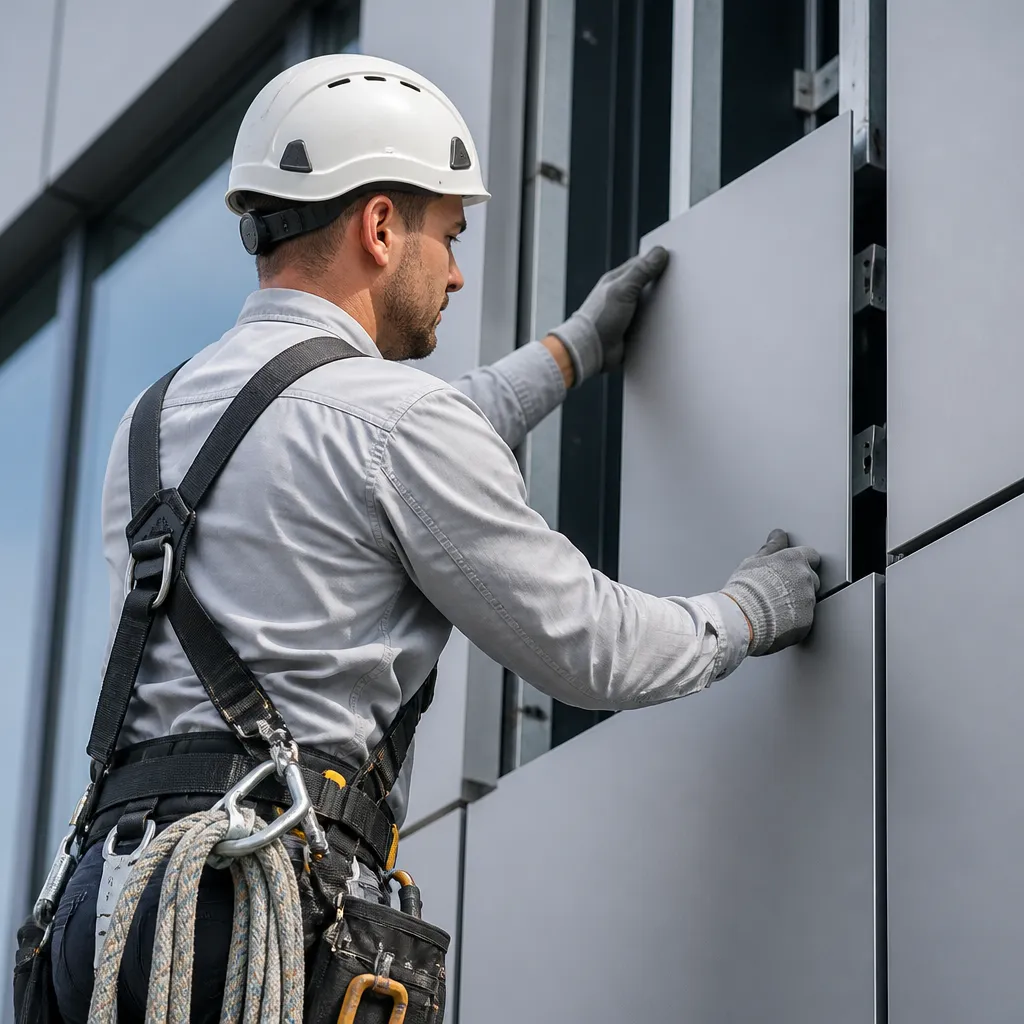
Skin thickness typically moves between about 0.30 mm for retail sign fascias and 0.40 mm to 0.50 mm for exterior commercial curtain walls. A thicker skin resists dents and wind loading better, which matters on tall or exposed elevations. For a single-storey shopfront, the thinner skin may be perfectly adequate, and paying for the heavier option would waste budget.
Access, programme and after-hours work
Material is rarely the biggest cost line on a large façade. Scaffolding, hoists, lane closures, security and after-hours labour often add more than the difference between two panel types. A two-week programme that runs through a trading peak can cost more in lost customer access than in installation labour. Build the access plan into the first budget rather than adding it as a variation later.
Comparing Wrap, ACP Panel and Composite Plank Systems
The three systems most often shortlisted for corporate and retail façades are a printed wrap, an ACP panel system with printed or cut-out graphics, and a composite or fibre cement plank system with signage inserts. They are not interchangeable. The table below shows where each one fits, based on the jobs we see most often across Gauteng and the rest of the country.
| Approach | Best suited for | Main trade-off |
|---|---|---|
| Printed vinyl or film wrap over an existing façade | Short to medium campaigns, leased buildings where fixings are not allowed | The substrate must be sound and clean, and the film lifespan is shorter on sun-exposed elevations |
| ACP panel system with printed or cut-out graphics | Corporate head offices, flat modern façades and permanent brand identities | Higher material and fixing costs, plus structural and fire approvals on taller buildings |
| Composite or fibre cement plank system with signage inserts | Hospitality, boutique retail and venues that want a warmer, textured look | Graphics are less crisp, and visible panel joints can break up large logos |
For a franchise flagship on a main road, the ACP panel system is usually the strongest choice, because it balances durability, print quality and approval risk. For a hotel or restaurant that wants the building to feel like part of its neighbourhood, a plank system with a discreet brand insert often looks more confident than a bold full-colour wrap. The wrap is the right tool when the campaign will end before the building needs repainting.
Installation Sequence and Corporate Identity Compliance
Corporate clients usually have a brand manual that controls colour, logo clear space, typography and the way the mark is placed on large surfaces. A full-building application puts all of those rules under stress, because a small colour drift on one panel becomes very visible across a whole elevation. Our approach is to agree the brand file before fabrication and to verify every panel against the approved reference on site, not in the workshop.
Installation should follow a fixed sequence: survey, drawings, sample panel, fabrication, fixing, and final inspection. Skipping the sample stage to save a week is the most expensive shortcut in this kind of work. A sample panel placed on the actual building, in daylight, shows colour and scale problems that a screen proof will never reveal.
Survey and elevation drawings
A proper survey records every window, door, downpipe, vent, air-conditioning unit and bracket on the elevation. These are the points where a graphic will break or where a panel will need a special cut. Without them, the design team is guessing, and the first real measurement often happens when the scaffolding is already up.
Colour control across panels and batches
Ask for a colour reference measurement for the brand colours, and confirm that the panel supplier can match it within an agreed tolerance. Keep a few spare panels from the same batch on site, labelled by elevation. When a panel is damaged after installation, a replacement from a different batch can look different in daylight even if it passed inspection in the factory.
Pro tip: Photograph the sample panel next to the existing corporate signage at the same time of day. Brand teams often approve colours under office lighting, and the difference becomes obvious only when the building is seen in full sun.
Maintenance, Fading and Realistic Lifespan
A branded façade needs a maintenance plan from day one. Most of the problems we are called to fix are not structural failures. They are dirty panels, slightly faded sections on sun-exposed elevations, or a corner where the sealant has pulled away and let in water. Each of these is cheap to fix early and expensive to fix late.
Set expectations with the client about what lifespan is realistic. A printed wrap on a sun-exposed elevation may need replacing well before a metal panel system with a quality coating. A panel system may outlast the campaign it was designed for, which is exactly why the design should be permanent-safe and not tied to a short-term slogan.
Cleaning schedule for coastal and inland sites
Coastal façades need more frequent washing to remove salt, and inland sites need attention to dust and bird activity around the top edges. A simple schedule of a gentle wash every few months, with a specialist inspection once a year, catches most problems. Avoid abrasive pads and strong solvents, which can damage the coating and leave dull patches.
Spotting early failure before it spreads
Look for lifting edges, sealant cracks, water staining under windows, and colour bands that follow the sun pattern across the building. These signs usually appear in the same places each year, so record them in a simple maintenance log with photographs. A small repair in year two is almost always cheaper than a full panel replacement in year five.
Frequently Asked Questions
How much does building façade branding cost in South Africa?
Costs vary widely with the system, panel thickness, core type, access requirements and building height. Compare quotes on the same specification sheet, and budget separately for scaffolding, permits and after-hours work, because these often change the total more than the material does.
Can a building be wrapped without drilling into the façade?
Yes, a printed wrap can often be applied over a sound, clean existing surface without new fixings, which makes it suitable for leased buildings. The surface must be checked first, and the landlord should approve the removal terms in writing.
Which material is best for a coastal building?
A metal panel with a fluoropolymer (PVDF) coating and corrosion-resistant fixings is usually the safest choice for salt-laden air. Ask for the coating and fixing specifications in writing, and inspect cut edges for proper sealing.
Do I need approval before installing a large branded façade?
In most cases, yes. Signage and building approvals vary by municipality and by building type, and landlords or body corporates often have their own consent process. Confirm the requirements with the local authority and the building owner before the artwork is finalised.
How long should a building wrap or cladding last?
A printed wrap on a sun-exposed elevation may need replacing sooner than a metal panel system with a quality coating. A realistic plan should include an annual inspection, periodic cleaning and a replacement budget for damaged or faded panels.
Have you managed a full-building brand project, or are you weighing a wrap against a panel system for your site? Share what worked, what surprised you and which approvals took longest, because those details help other franchise owners and facility managers plan better.
References
- Overview of exterior wall cladding materials suited to South African climate conditions
- Guide to cladding price factors, coatings and panel core types for South African buyers
- Research on how exterior façade design affects customer attraction in retail
- Article on how façade design communicates a company's mission and values