


Vehicle Branding vs. Static Signage: Best Reach in SA
Most business owners in Gauteng frame the signage question wrong. They ask, "Can we afford vehicle branding?" when the real question is, "How much visibility are we leaving on the table by not using it?" Vehicle branding South Africa has moved well beyond delivery-truck decals. It is now a serious, measurable advertising channel that competes directly with outdoor static signage on cost per impression, and often wins. But "wins" is not the whole story. Static signage, from shopfront fascias to illuminated pylon signs, does things a wrapped bakkie simply cannot. The smart answer for most corporate clients and franchise owners is not a choice between the two. It is knowing exactly when each earns its keep.
Table of Contents
- Quick Takeaways
- How Reach Is Measured in SA Outdoor Advertising
- Vehicle Branding: The Mobile Reach Case
- Static Signage: The Fixed-Presence Case
- Vehicle Wraps vs. Static Signage: Direct Comparison
- Where Each Format Breaks Down
- Corporate Identity and Franchise Compliance
- Building a Combined Signage Strategy
- Frequently Asked Questions
- References
Quick Takeaways
| Key Insight | Explanation |
|---|---|
| Vehicle wraps generate massive daily impressions | A single branded vehicle can generate between 30,000 and 70,000 impressions per day in dense urban traffic, making it one of the highest-reach formats available at that price point. |
| Static signage anchors your location identity | Shopfront fascias, pylons, and channel lettering tell passing traffic exactly where you are. Vehicle branding cannot replicate the location-specific authority of a well-lit permanent sign. |
| Vehicle wrap CPM is exceptionally low | Because the investment is once-off and the lifespan is three to seven years, the cost per thousand impressions for a wrapped vehicle is a fraction of what most recurring outdoor media charges. |
| Gauteng's road network amplifies mobile reach | Routes connecting Johannesburg, Sandton, Midrand, and Pretoria carry millions of commuters daily. A fleet operating those corridors accumulates brand touchpoints across multiple target audiences in a single day. |
| Cross-border SADC routes extend reach beyond SA | Fleet vehicles travelling the Southern African Development Community freight corridors carry brand visibility from Gauteng into neighbouring markets, effectively making a truck an international advertising asset. |
| Static signage carries zero compliance risk on the road | Vehicle branding must meet road safety and visibility regulations. Professionally installed wraps handle this, but a poorly designed or DIY application can create legal exposure for a fleet operator. |
| The strongest strategies combine both formats | Corporate clients and franchises that use vehicle wraps for reach and permanent signage for location authority consistently outperform businesses that rely on a single format. |
How Reach Is Measured in SA Outdoor Advertising
Reach in outdoor advertising is measured by impressions: the number of times a person has an opportunity to see your brand. For static signage, that number depends on daily pedestrian and vehicle traffic past a fixed point. For vehicle branding, it depends on routes driven, time spent in traffic, and parking in high-density areas.
South Africa presents unusually strong conditions for both formats. High commuter dwell time, dense metropolitan corridors, and long average drive durations mean that both a pylon sign at a Sandton intersection and a wrapped delivery vehicle stuck on the N1 are getting seen, and seen repeatedly, by the same audiences day after day. Repetition is what converts an impression into recognition.
The critical difference is geography. Static signage reaches everyone who passes that one location. Vehicle branding reaches everyone who happens to be on the same road at the same time as your fleet, which could be Pretoria in the morning and Midrand by afternoon.
Vehicle Branding: The Mobile Reach Case
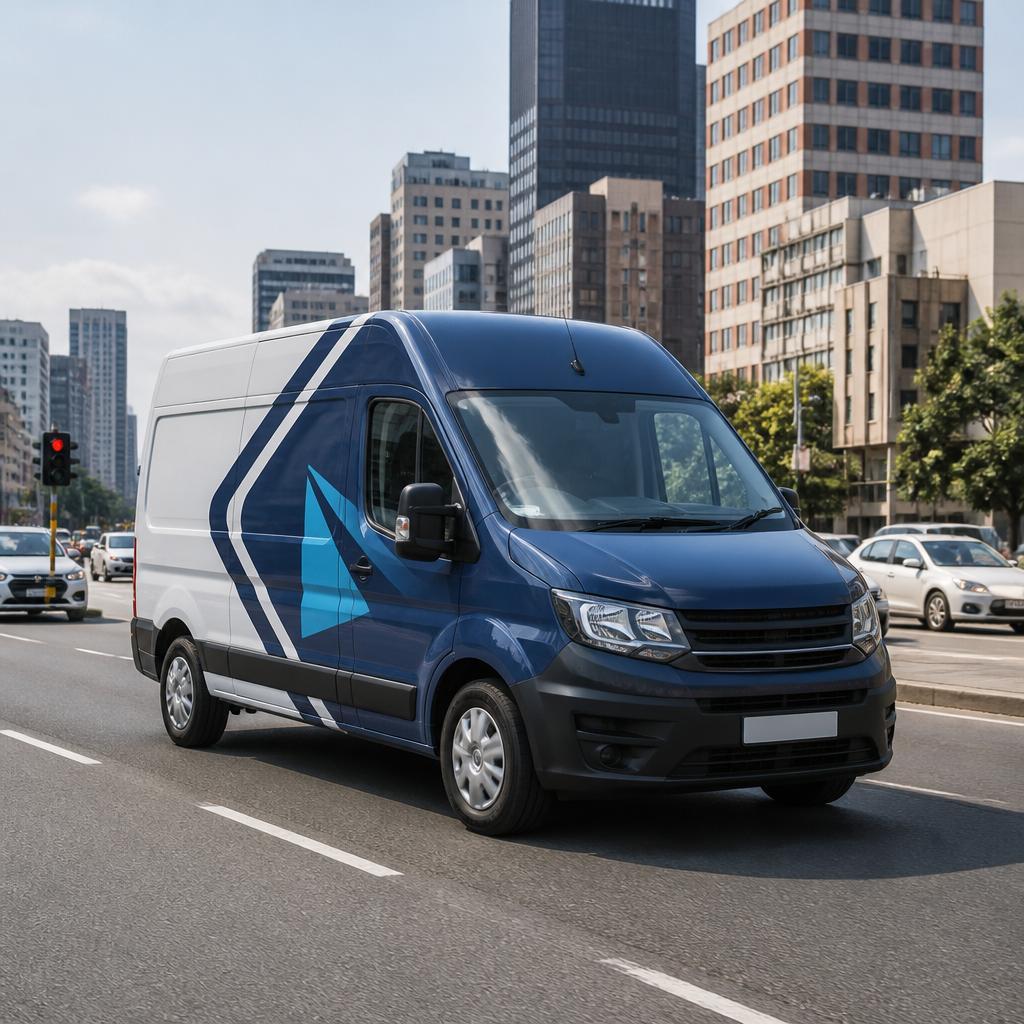
The numbers behind vehicle wraps are not marketing fluff. Research consistently cited in the South African signage and print industry points to a single branded vehicle generating between 30,000 and 70,000 impressions per day in urban traffic. A 25-vehicle logistics fleet operating Gauteng routes can accumulate millions of brand impressions monthly without a single rand spent on media placement fees.
Why Gauteng's Roads Work in Your Favour
The road network connecting Johannesburg, Sandton, Midrand, and Pretoria is one of the busiest commuter corridors on the continent. A wrapped bakkie driving those routes encounters the same commuters repeatedly during morning and evening peaks, building the kind of visual familiarity that static signage at a single location cannot replicate at scale. The compounding effect is real: the more kilometres your vehicles cover, the more touchpoints you accumulate.
There is also a geographic reach argument that goes beyond Gauteng. Fleet vehicles travelling Southern African Development Community freight corridors carry brand visibility across borders daily, effectively making a long-haul truck an advertising asset in multiple markets simultaneously. For businesses with pan-African ambitions, that is difficult to price.
Once-Off Cost, Multi-Year Returns
Unlike a billboard rental or a digital ad campaign, a vehicle wrap is a capital expenditure with a known lifespan. Quality cast vinyl, properly installed under South African UV conditions, carries a five-to-seven-year outdoor warranty. The cost per impression over that lifespan is among the lowest of any advertising format. There are no monthly fees, no renewal negotiations, and no rate card increases.
Pro tip: When briefing a vehicle branding project, always specify cast vinyl rather than calendared vinyl. South African UV exposure in Johannesburg and Pretoria will degrade cheap calendared material in under twelve months. Cast vinyl at a slightly higher upfront cost delivers the full five-to-seven-year lifespan your investment requires.
Every kilometre a branded vehicle travels becomes a touchpoint for brand awareness. The branding investment is once-off, but the visibility compounds over time.
Static Signage: The Fixed-Presence Case
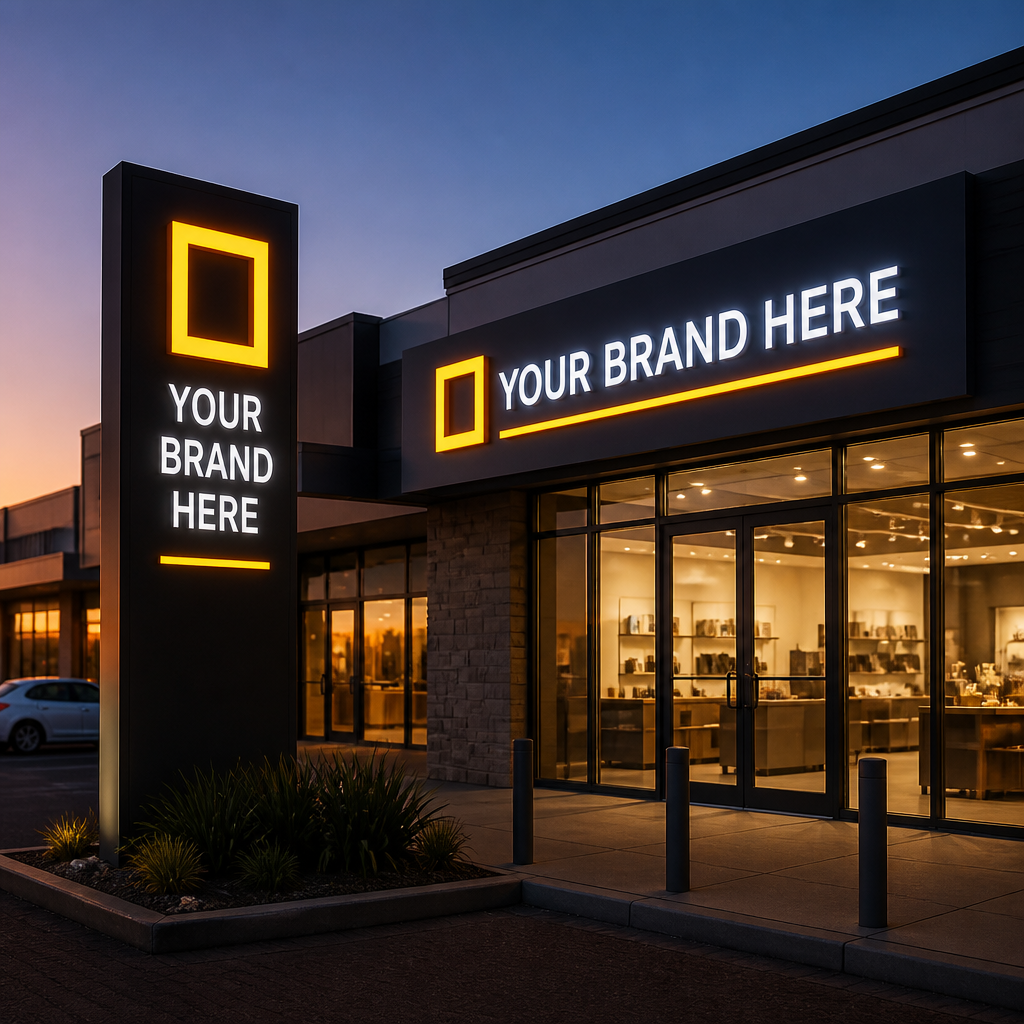
Static signage does something vehicle branding cannot: it tells a customer exactly where you are. A pylon sign visible from a highway off-ramp, an illuminated fascia above a retail entrance, or channel lettering on a corporate headquarters does not chase the audience. It waits for the audience to come to it, and it communicates authority, permanence, and location in a single glance.
Location Identity and Wayfinding
For retail chains, franchise networks, and hospitality businesses, permanent signage is not optional. It is the primary wayfinding tool for customers who already know they want to visit. A well-placed LED-backlit fascia or a properly illuminated pylon converts road traffic into foot traffic. No vehicle wrap replicates that function.
The reach calculation for static signage is also more predictable. A sign at a high-traffic intersection delivers a consistent, auditable impression count based on published traffic data for that route. Campaigns built on static signage are easier to forecast and easier to justify in a marketing budget.
Brand Authority Through Permanence
There is a psychological dimension to static signage that gets overlooked in reach debates. A permanent, professionally fabricated sign signals that a business is established, invested in its location, and not going anywhere. For corporate clients and franchise operators where trust is a core brand asset, that signal matters. Static signage builds familiarity through repetition over time. Digital and illuminated variants add visibility after dark, extending effective reach into evening hours without any additional cost per impression.
Pro tip: For franchise operators managing multiple locations, static signage is where corporate identity standards are most visible and most scrutinised by customers. Inconsistent fonts, faded materials, or misaligned illumination across branches erode brand equity faster than any other signage failure. Insist on a single supplier who holds your brand master file and applies it identically across every site.
Vehicle Wraps vs. Static Signage: Direct Comparison
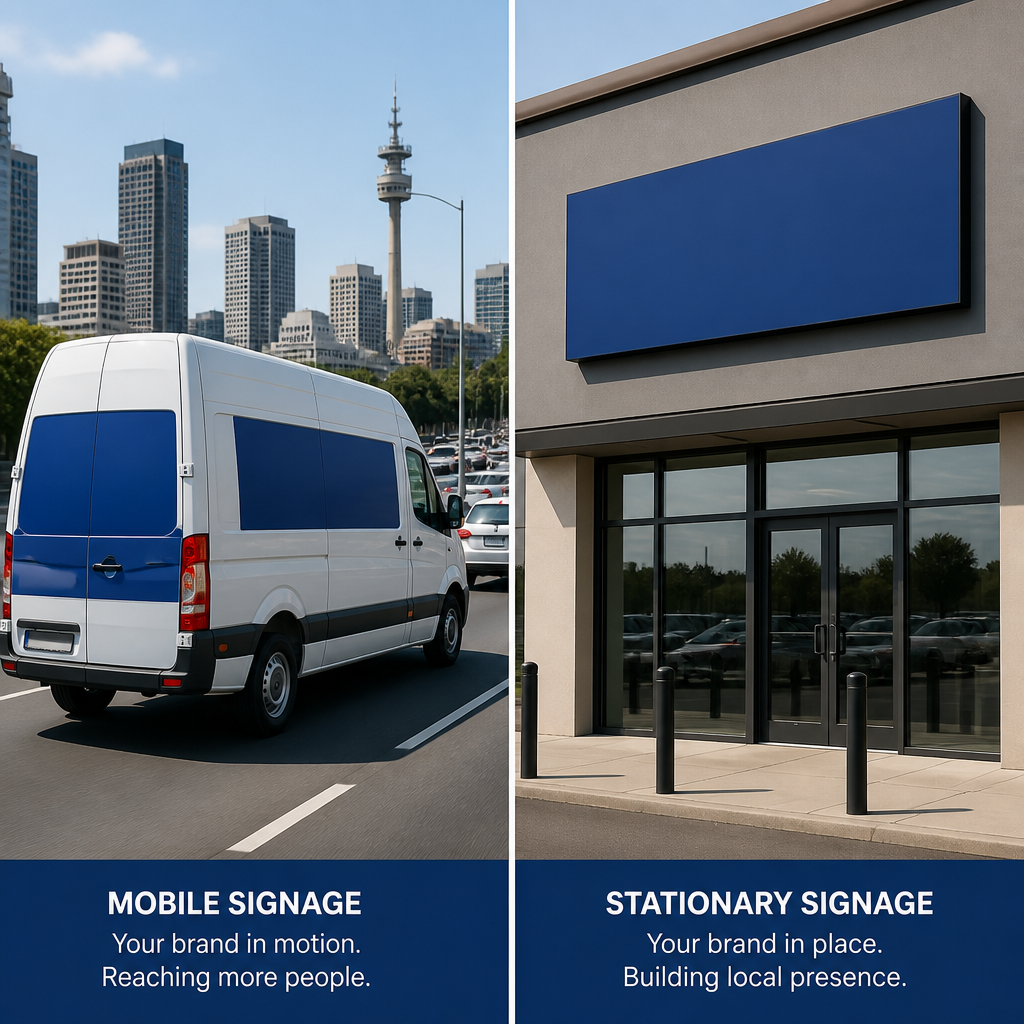
Choosing between these two formats without a direct comparison of their practical characteristics leads to underinvestment in one and over-reliance on the other. The table below compares both formats across the dimensions that matter most to corporate businesses, franchise operators, and commercial property managers in South Africa.
| Dimension | Vehicle Branding (Wraps and Fleet Graphics) | Static Signage (Fascias, Pylons, Channel Letters) |
|---|---|---|
| Daily Impression Range | 30,000 to 70,000 per vehicle in dense urban routes | Depends on fixed location traffic; predictable but bounded |
| Geographic Coverage | Unlimited, follows your fleet's routes including cross-border | Single location only; multiple sites require multiple installs |
| Cost Structure | Once-off capital cost; no ongoing media fees | Once-off fabrication and install; permit and maintenance costs ongoing |
| Lifespan | 3 to 7 years for quality vinyl; dependent on driving conditions and care | 5 to 15 years for quality fabrication; LED illumination lasts longer than fluorescent |
| Location Authority | None; vehicle branding does not indicate where a business is located | Primary function; essential for wayfinding and foot traffic conversion |
| Brand Compliance Control | Requires rigorous briefing; each vehicle must match the brand master file exactly | Managed through material spec and colour matching at fabrication stage |
| Regulatory Considerations | Must not obstruct driver visibility; must avoid confusion with emergency vehicles | Municipal bylaws govern signage size, illumination, and positioning per site |
| Best Use Case | Businesses with fleets, service vehicles, or delivery operations in urban corridors | Retail, hospitality, franchise, and corporate premises requiring location identity |
Where Each Format Breaks Down
Vehicle branding has one structural weakness: it delivers no location signal. A beautifully wrapped fleet can generate enormous brand awareness across Gauteng, but if a customer cannot find your premises, that awareness does not convert to a visit. Businesses that rely entirely on vehicle branding without permanent on-site signage are building brand recognition without giving customers a destination.
Static signage has the opposite problem. A premium fascia or pylon is only ever seen by people who are already close to your location. It cannot follow your sales team to a client site, it cannot cover new territory as your business grows, and it cannot appear at an event or exhibition without a separate temporary signage solution. A business that invests only in permanent signage is anchoring all of its visibility to a fixed point in a city where audiences are constantly in motion.
A common mistake among franchise operators is treating vehicle branding as an afterthought once the shopfront signage is complete. The two formats serve fundamentally different audience moments, and deferring one consistently underserves a segment of the market.
Corporate Identity and Franchise Compliance
For any business that operates under a defined brand standard, whether a corporate group, a national franchise, or a licensed brand, both signage formats carry significant compliance obligations. A wrapped vehicle that uses the wrong shade of a brand's primary colour, or a fascia sign with incorrect letter spacing, does real damage to brand equity. Customers notice inconsistency even when they cannot articulate it.
Managing Brand Standards Across a Fleet
Vehicle branding at fleet scale introduces a coordination challenge that single-vehicle operators do not face. Each vehicle must be wrapped from the same approved artwork, using the same vinyl specifications, by an installer who understands how colour and finish interact with different vehicle curves and surfaces. Without a centralised briefing process and a supplier who holds the master artwork, a 20-vehicle fleet can end up with 20 subtly different brand expressions.
The solution is to treat vehicle branding as part of the same corporate identity programme as your permanent signage. The same colour standards, the same typeface specifications, and the same approved logo files should govern both. When a single supplier manages both formats, the risk of drift between your parked vehicles and your shopfront is significantly reduced.
Rental Solutions for Temporary or Event-Based Needs
Not every signage need is permanent. Events, seasonal campaigns, product launches, and temporary retail activations all create demand for signage that needs to perform at a high level but does not need to last five years. For these situations, rental signage solutions, including display stands, banners, and temporary branded structures, provide the same brand presence without the capital commitment of a permanent installation.
Building a Combined Signage Strategy
The businesses that extract the most value from their signage investment are not the ones that pick one format. They are the ones that map each format to a specific audience moment and ensure both are executed to the same brand standard.
In practice, that means using static signage to own your location, convert road traffic into visitors, and establish permanence in your market. It means using vehicle branding to extend your brand's reach into every route your fleet covers, building familiarity with audiences who may never pass your premises. And it means using temporary and rental signage to activate at events or promotions without compromising either permanent format.
For corporate clients operating across multiple Gauteng locations, the logic scales directly. A pylon or LED fascia at each site handles location identity. A consistently branded fleet handles mobile reach across the broader region. Together, the audience encounters your brand at multiple touchpoints in a single week, which is precisely how brand recognition becomes brand preference.
Frequently Asked Questions
How many impressions does a wrapped vehicle generate in Gauteng traffic?
Research cited consistently across the South African signage and print industry points to between 30,000 and 70,000 impressions per day for a single branded vehicle operating in dense urban traffic. In Gauteng's high-commuter corridors, including routes through Johannesburg, Sandton, Midrand, and Pretoria, vehicles operating during peak hours are exposed to some of the continent's highest daily traffic volumes. A fleet of even five to ten vehicles accumulates impression numbers that would cost significantly more to achieve through recurring billboard or digital media placements.
Is vehicle branding or static signage more cost-effective for a small business?
For a small business with at least one service or delivery vehicle, vehicle branding typically delivers a lower cost per impression over its lifespan because the asset is already part of the business operation. The branding cost is once-off, and the vehicle continues generating impressions for three to seven years. Static signage is non-negotiable if you operate from a fixed premises and need foot traffic, but as a reach tool for a business without a permanent high-traffic shopfront, vehicle branding generally outperforms on cost per impression.
What is the lifespan of a professionally installed vehicle wrap in South Africa?
A quality cast vinyl wrap, properly installed and maintained, carries a five-to-seven-year outdoor lifespan. The key variable in South Africa is UV exposure. Gauteng and other high-altitude inland locations experience intense ultraviolet radiation that degrades cheaper calendared vinyl in under twelve months. Specifying cast vinyl with a protective laminate at the outset protects both the wrap and the vehicle's original paintwork, and ensures the full lifespan is achieved.
Can vehicle branding meet corporate identity standards for a franchise network?
Yes, but only when the process is managed centrally. Every vehicle in a franchise fleet must be wrapped from the same approved artwork file, using consistent vinyl specifications and colour-matched materials. A franchise that allows individual franchisees to source their own vehicle branding independently will almost always end up with brand inconsistency across the fleet. Centralising the brief, the artwork approval, and the supplier selection is the standard approach for franchise networks that take brand compliance seriously.
Does static signage still deliver reach in an era of mobile and digital advertising?
Permanent static signage delivers something digital advertising cannot: it is always on, visible to everyone who passes the location, and costs nothing per impression once installed. In South Africa's high-commuter urban environment, static boards and fascia signs positioned at major intersections or highway off-ramps benefit from daily repetition with the same audiences. That repetition builds visual familiarity, which is a documented driver of brand trust. Static signage has not lost its reach argument. It has simply been joined by formats that extend reach beyond a fixed location.
What types of static signage work best for high-visibility corporate locations?
For corporate and retail premises in Gauteng, LED-backlit fascia signs, illuminated pylon signs, and channel lettering consistently outperform non-illuminated formats because they extend visible hours into the evening. Pylon signage is particularly effective for properties set back from a road or located in commercial parks where a shopfront sign alone would not be seen from the street. Channel lettering adds a three-dimensional premium finish that reinforces brand authority at close range. The right choice depends on the site's visibility conditions, municipal bylaw constraints, and the brand's visual identity requirements.
Should a hospitality or events business prioritise vehicle branding or static signage?
For hotels and restaurants with a fixed venue, permanent static signage is the foundation. Guests and diners need to find you, and a well-lit, clearly visible entrance sign is a direct conversion tool. Vehicle branding becomes valuable when the business operates shuttle services, catering vehicles, or event transport, turning those assets into mobile brand presences that reach audiences the venue itself cannot. For event companies and exhibition organisers, rental display stands and temporary branded structures often provide more flexibility than either permanent format.
If you are weighing up vehicle branding against static signage for your own business, we would like to hear what factors matter most to you and what your current setup looks like.
We would love your feedback and any insights you would share with others. What perspective would you add?
References
- Why fleet branding is transforming Southern Africa's roads into advertising corridors
- Commercial vehicle branding in South Africa: cost structure, lifespan, and compliance overview
- The return on investment case for vehicle branding in Johannesburg's high-traffic environment
- How static billboards perform in South Africa's commuter-heavy outdoor advertising market
- Vehicle wrapping in Gauteng: material specifications and cost-per-impression analysis