


Signage Trends in South Africa 2027: What Comes Next
Most signage budgets in Gauteng still get spent the way they did in previous years: a fascia here, a set of pavement boards there, and a full rebrand every time head office changes its logo. That approach is getting expensive. As we move toward 2027, the signage trends in South Africa that matter most are less about flashy new technology and more about which formats earn their keep on the building, the lease, and the brand standard. This guide sets out what we are seeing on real projects and what corporate teams, franchise owners, and venue managers should decide now.
Table of Contents
- Quick Takeaways
- Digital Screens Are Taking Share, but Printed Signage Is Not Dead
- LED Backlit Fascia and Channel Letter Upgrades
- Rental and Modular Signage for Events and Pop-Up Retail
- Corporate Identity Compliance Across Franchise Networks
- Sustainable Materials and Power Planning
- Comparing Sign Formats Side by Side
- Digital Screens for Hospitality and Retail Venues
- Frequently Asked Questions
- References
Quick Takeaways
| Key Insight | Explanation |
|---|---|
| Budget for LED-backlit fascia first | On most commercial frontages, a fascia upgrade gives more visibility per rand than adding loose boards. Price the electrical work before you approve the artwork. |
| Treat printed and digital as partners | Printed signage still holds a large share of the market. The practical growth is in pairing a permanent exterior with a small number of screens inside the venue. |
| Rent for short campaigns, buy for permanence | In our experience, if a message runs for one season, modular frames or rental displays usually beat a purchase. Put capital into fixed installations that carry the brand for years. |
| Write a sign standards manual before the next rollout | Franchise networks drift when every site manager reads the logo, colour and placement differently. A short set of approved templates prevents most rework. |
| Plan power and maintenance at quote stage | Grid interruptions make battery backup and low-draw LED modules worth pricing. A sign that cannot be cleaned or serviced easily will go dark in practice. |
| Confirm municipal rules before the design freeze | Sign by-laws differ between municipalities. Confirm size, projection and illumination limits before the design is locked, not after installation. |
Digital Screens Are Taking Share, but Printed Signage Is Not Dead
Printed signage is not disappearing, but it is no longer growing on its own momentum. Smithers reports that the global printed signage market declined at a 2.2% compound annual rate in value to $40.9 billion by 2023, and forecasts only 0.2% annual growth to $41.4 billion by 2028 as digital formats compete for the same wall space. That is a market under pressure, not a market in collapse.
The regional picture matters for South African buyers. Smithers notes that North America and Western Europe both saw falling printed signage value over the last five years, while Asia remained the largest market. South Africa does not follow those mature markets neatly. On local sites, many businesses are still upgrading basic frontages rather than swapping out screens for something newer.
On the digital side, MarketsandMarkets values the South African digital signage market at about $3,994.4 million in 2026, projected to reach $6,337 million by 2031, an 8.0% compound annual growth rate. Data Bridge projects a faster rate of 13.30% a year from 2025 to 2032 from a much smaller base, so treat any single forecast as directional rather than precise.
For a Gauteng corporate or franchise brand, the lesson is simple: plan the screen as an addition to the sign, not a replacement for it. A lobby screen or an in-store menu board works best when the exterior already tells people what the business is. Content can change daily, but the building still needs a permanent identity that reads from the road.
LED Backlit Fascia and Channel Letter Upgrades
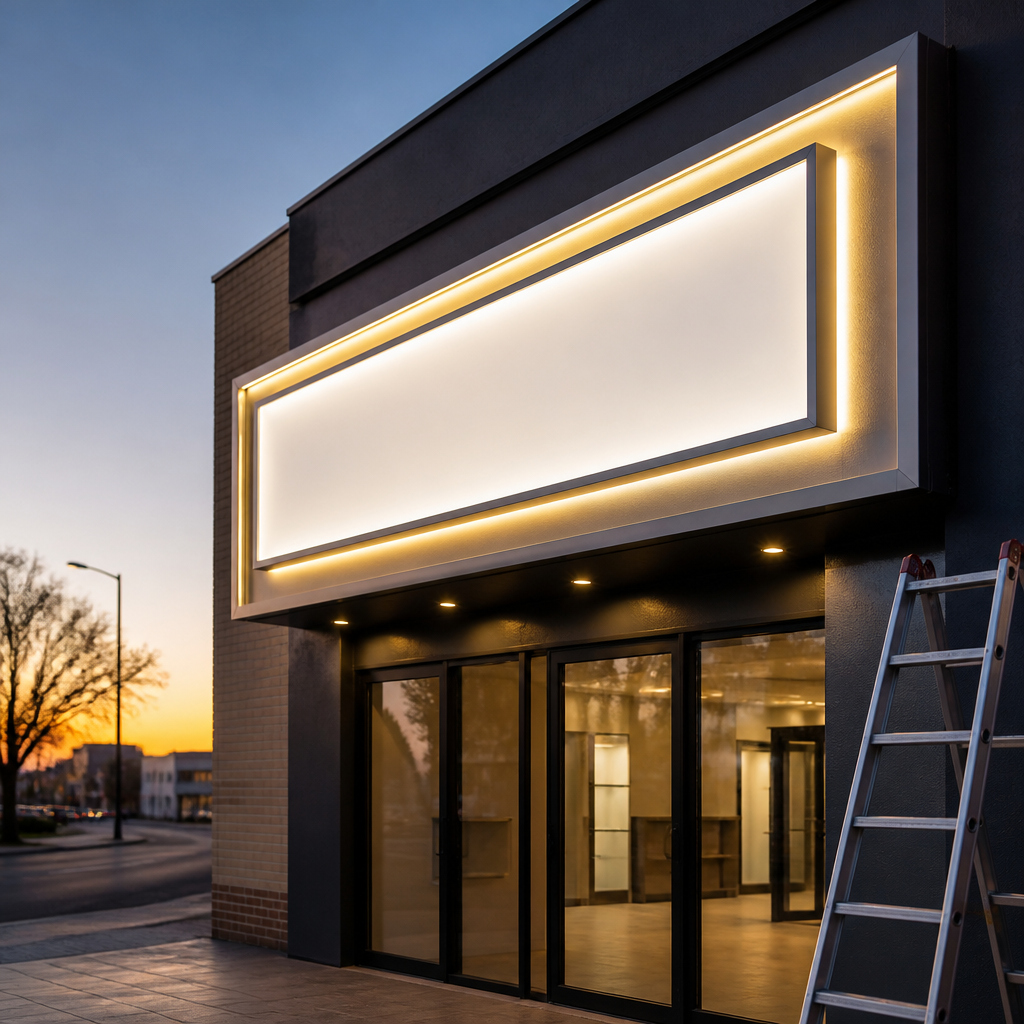
The most common upgrade we quote is still the same: replace an ageing fluorescent or neon fascia with LED-backlit or LED channel letters. The reason is running cost and maintenance, not just brightness. A fascia that is easy to service stays bright for longer, and that matters more than the initial look.
Why LED Is Replacing Neon on Commercial Frontages
Glass neon still has a loyal following because of its warm, continuous glow, and some hospitality brands want exactly that look. For most day-to-day trading signage, however, LED has become the default. On our installations, the difference shows up on the electricity account and in how often a tube fails. A cracked neon tube means a trip to a specialist, while an LED module can often be swapped in place.
Brightness is not the same as legibility. A bright sign at night only helps if the lettering has strong contrast and the light is even across every letter. We specify diffusers and module spacing before we discuss lumens, because hot spots are the first thing clients complain about once the sign is switched on.
Energy Consumption and Maintenance Realities
Ask any site manager how often a sign gets serviced and you will hear a wide range of answers. The cheaper the build, the more often someone climbs a ladder. Choose sealed LED modules with accessible driver boxes, and specify drainage in channel letters so water does not sit inside the returns.
Power is the question that changes the design in South Africa. Grid interruptions mean a sign that runs all night may go dark at the worst moment for a restaurant or a clinic. We ask clients whether they want battery backup on the main fascia and whether a lower-draw module plan is enough, because that decision changes the transformer size and the cable route.
Pro tip: Before approving channel letter artwork, ask the fabricator for a night-time mockup or photo. Daylight approvals hide hot spots and uneven lighting that become obvious after dark.
Rental and Modular Signage for Events and Pop-Up Retail
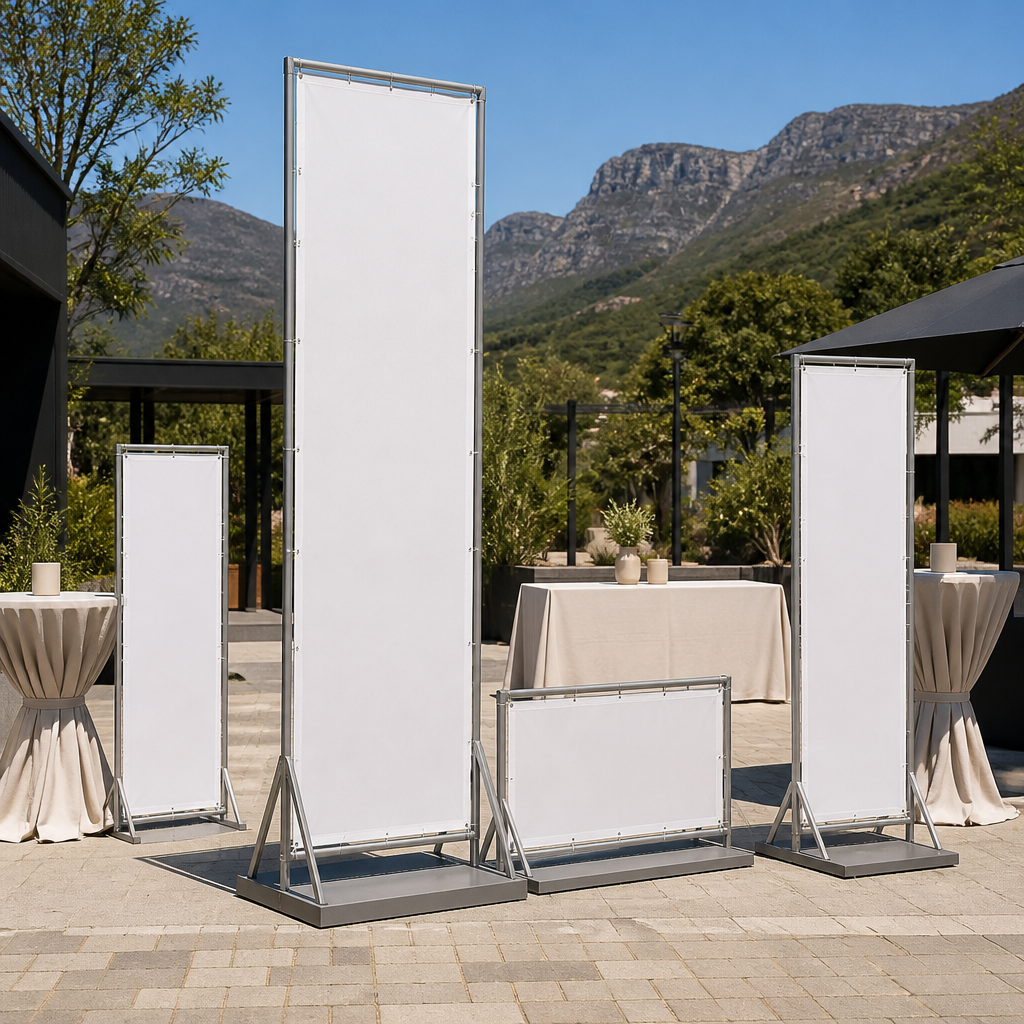
Event venues and short-term retail operators need a different kind of sign. It has to be installed in a day, dismantled in a day, and stored between uses without taking over a warehouse. Rental makes sense because it turns a capital purchase into an operating cost that matches the length of the campaign.
Hire Versus Buy for Seasonal Campaigns
A useful test is how many months the message needs to stay on the wall. If a campaign runs for a single season, a modular frame or rental display almost always wins on total cost. If the same message will still be relevant in three years, buying a permanent sign is cheaper even with the higher upfront cost.
Modular systems also reduce the risk of damage. Panels that can be replaced individually mean a cracked corner does not force a full reprint. Ask for a spares list at quote stage, because a rental provider that cannot replace a single panel quickly is not offering a real rental solution.
Transport and Installation Across Africa
Rental projects often extend beyond Gauteng. Freight, crate design and on-site fixing details change with distance, so the sign should be engineered for transport from the first drawing. A display built for a single van trip will survive a long road journey far better than one designed only for a studio.
Installation is where rental projects usually slip. Confirm access, power points, ground conditions and exposure to wind before the crew arrives. A stand that looks solid in a showroom can move in an open venue if the base plate is not sized correctly.
Corporate Identity Compliance Across Franchise Networks
For franchise networks, the main signage problem is no longer design. It is consistency. Once a network passes a few dozen sites, small variations in colour, logo clearance and sign placement add up to a brand that looks like several different companies.
Building a Sign Standards Manual
A standards manual does not need to be a 120-page document nobody reads. The version that works is a short set of approved templates, exact colour references, minimum clear space around the logo, and a placement grid showing where each sign type may go. Give each franchisee a PDF they can send to their landlord.
Make the manual a condition of approval. If a site manager can order a sign from any local supplier without checking the template, you will spend more on corrections than you saved on the first order.
Rolling Out Changes Without Chaos
When head office changes a logo or tagline, the rollout is where most brands lose control. Stagger the replacement by region, keep the old sign up until the new one is approved on site, and track each location in a simple register. A spreadsheet with a photo for each site beats a dozen emails asking whether a store has been done.
Corporate teams should also decide early which changes are mandatory and which are optional. Forcing every franchisee to upgrade a lightbox at the same moment is a fast way to create resentment and slow payments.
Sustainable Materials and Power Planning
Sustainability is entering procurement conversations in South Africa, usually from corporate clients with group-wide reporting targets. Signage is an easy place to start because the materials are visible, many print jobs have short lifespans, and the energy use of lighting can be measured.
Recyclable Substrates and Printing Choices
Ask your supplier which substrate is used for each sign and whether it can be recycled at end of life. Many plastic substrates have limited local recycling routes, so ask about take-back arrangements before you sign off. Where a sign is replaced every few months, a lighter board or a reusable frame usually cuts waste more than switching ink.
Print finish choices also matter. A laminate that extends the life of an outdoor graphic reduces reprints, and reprints are often the largest hidden waste in a signage programme.
Solar and Off-Grid Considerations
Solar-assisted lighting deserves a serious quote for pole and pylon signs where cabling is expensive or supply is unreliable. It is not a universal answer. Battery capacity, panel orientation and the local pattern of cloudy days decide whether the sign runs through the night, so ask for a written performance estimate rather than a brochure claim.
Our rule is to do the power plan before choosing the sign face. The lighting load drives the power source, and the power source drives the cost of the whole installation.
Comparing Sign Formats Side by Side
Three formats cover most of the decisions we see on corporate and hospitality projects. The table below compares them on the factors that usually decide the order: running cost, look, and how easily they handle a change of brand.
| Sign Format | Best Use Case | Main Trade-off |
|---|---|---|
| LED-backlit fascia | Main frontages where the brand needs strong night visibility | Higher upfront cost than a basic printed fascia, but lower running cost and easier maintenance |
| LED channel letters | Individual brand letters for shopfronts, hotels and restaurants | Needs careful spacing, drainage and wiring, and a skilled fabricator |
| Glass neon | Hospitality brands that want a warm, handcrafted glow | Fragile and harder to repair, with a running cost that usually sits above LED |
Pick the format that matches the job. For a head office that must be read from the street at night, LED-backlit fascia is the default. For a restaurant that sells atmosphere, a small neon feature can sit alongside LED lettering. Mixing formats on one building is common and usually works well, provided the colour temperature and brightness are balanced.
A sign that matches the building and the brand standard will outperform a brighter sign that nobody has approved.
Reading the Table Against Your Lease Terms
Landlords often decide which formats you can use before you do. Read the lease for approval rules, permitted illumination and removal obligations at the end of the term. A channel letter sign that must come down at lease end carries a very different cost from one the landlord will keep.
Get the landlord's written approval before fabrication, not after. A fabricator who has built a sign the landlord rejects will not absorb that cost for you, and it is the most expensive mistake we see in this part of the market.
Digital Screens for Hospitality and Retail Venues
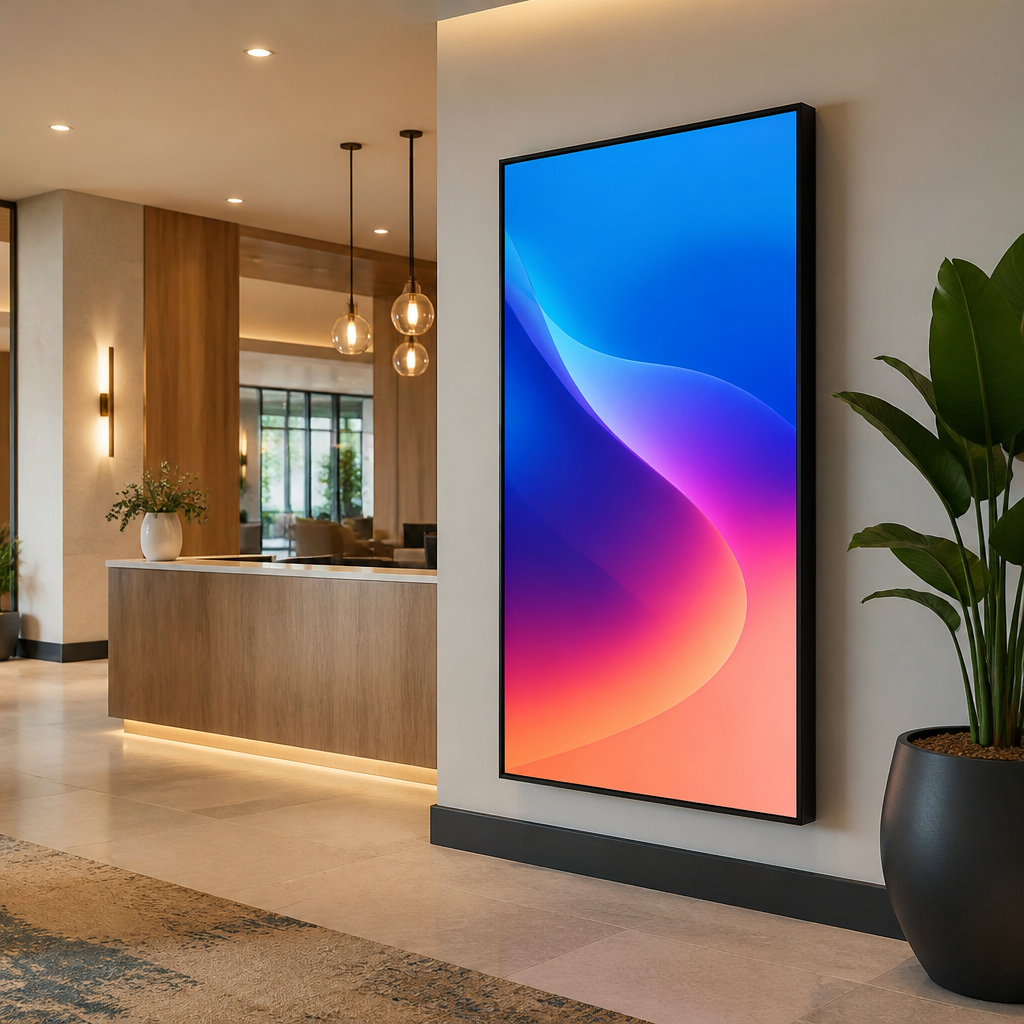
Digital screens are most useful inside a venue, where content changes by time of day, promotion or audience. A hotel lobby can show event listings in the morning and check-in messages in the afternoon. A fitness centre can rotate class timetables and membership offers without reprinting anything.
The software matters more than the screen. Content management that lets a manager update a display from a phone, schedule playlists and push changes across several sites is what separates a useful network from hardware that stops updating after a month. MarketsandMarkets singles out software as a key growth driver in its South African analysis, so that is where we push clients to spend their time.
Pro tip: Before buying a screen, ask the software provider how a content change reaches a single site when the internet connection drops, and whether playlists keep running on the local device.
Screen Placement and Brightness
Place screens where people stand still for a few seconds, such as lift lobbies, queue lines and waiting areas, not where they walk past at speed. Match brightness to the room. A screen that looks perfect in a dim showroom will wash out under a large window, and an overly bright screen in a restaurant can ruin the mood.
Keep the message simple. A venue screen should carry one message per loop, with large type and a clear call to action. Text that a person cannot read from a few metres away will be ignored.
Where Digital Fits Alongside Fixed Signage
Digital is an addition to the building's permanent identity, not a substitute for it. Keep the exterior fascia static and legible from the street, and let the screen do the work inside. Venues that try to replace the frontage with a large video panel often end up with something expensive to run and hard to read in daylight.
Frequently Asked Questions
What are the main signage trends in South Africa for 2027?
The clearest trends are LED-backlit fascia and channel letter upgrades, rental and modular systems for short campaigns, tighter brand compliance across franchise networks, and digital screens used as a supplement to permanent exterior signage. Power planning and sustainable materials are also moving into standard quotes.
Is printed signage still worth investing in?
Yes, for exterior identity and wayfinding. Smithers forecasts only modest growth for printed signage to 2028, so it is not expanding fast, but a well-made printed or fabricated sign still does the core job of telling people where a business is. The mistake is treating it as a cheap placeholder rather than a permanent asset.
Does LED-backlit signage really cost less to run than neon?
In most cases it does, because LED draws less power and tends to need fewer repairs. The actual saving depends on your trading hours and tariff, so ask your fabricator for a running cost estimate based on your own operating schedule rather than relying on a generic comparison.
Should a franchise buy or rent signage for pop-up events?
Rent when the message will only be used for one campaign or season, and buy when the message will stay relevant for several years. Ask any rental provider for a list of replaceable panels and their replacement lead times before you commit, since a damaged panel can otherwise stop the whole display.
What should a sign standards manual include?
Keep it short and practical. It should include approved sign templates, exact colour references, minimum clear space around the logo, a placement grid for each sign type, and a clear approval process. Make compliance a condition of approval so franchisees cannot order off-brand signs from unapproved suppliers.
Do I need municipal approval before installing a new sign?
In many cases, yes. Sign by-laws vary between municipalities and can cover size, projection and illumination. Confirm the rules for your specific area with the relevant municipality and your landlord before fabrication, rather than relying on what a neighbouring business was allowed to do.
What sign upgrade is your team weighing for 2027, and which of these trends have you already seen work or fail on your own sites?