


Car Dealership Signage South Africa: Street to Showroom
A driver approaching a dealership at speed has very little time to decide whether to slow down, indicate, and turn in. Most dealers in Gauteng lose that decision long before a salesperson gets the chance to say hello. Effective car dealership signage in South Africa is not a logo on a fascia. It is a sequence of signs that carries the eye from the main road, across the forecourt, and through the showroom door. This guide covers how to plan that sequence, what approvals look like in practice, and where dealerships most often waste money.
Table of Contents
- Quick Takeaways
- Why the Street Frontage Decides Who Walks In
- Sign Approvals and Landlord Consent in Gauteng
- Showroom Signage That Sells the Vehicle
- Illuminated and Digital Signs for the Forecourt
- Corporate Identity Standards for Dealer Groups and Franchises
- Choosing the Right Sign Type for Each Job
- Maintenance, Rental, and Keeping Signs Working
- Measuring Whether Your Signage Brings Visitors In
- Frequently Asked Questions
- References
Quick Takeaways
| Key Insight | Explanation |
|---|---|
| Test legibility from the approach lane | Stand on the road shoulder where a driver first sees the site. If the brand name does not read in one glance, the sign is too small or carries too much text. |
| Sequence directional signs before the entrance | Drivers who see the turn early commit to it calmly. Drivers who see it late brake hard, and that is where accidents and missed turns happen. |
| Start approvals before the design is final | Municipal sign approval and landlord consent often take longer than fabrication. Confirm sizes, illumination rules, and placement before the proof is signed off. |
| Keep showroom signs about the vehicles | Interior signs should name the model on display, the price or finance message, and the brand. Generic slogans add nothing a buyer can act on. |
| Work from the brand manual, not memory | Franchise and group dealers should check colour, typeface, logo clearance, and placement against the manual on every proof. |
| Budget for upkeep from day one | A failed lamp or faded vinyl makes a dealership look closed after dark. Schedule night inspections and cleaning as a fixed cost. |
| Measure footfall before and after installation | Record weekly walk-ins and enquiries for at least a month before a new sign goes up, then compare. Judge the sign by the numbers, not by how it looks. |
Why the Street Frontage Decides Who Walks In
Most dealerships are sold to their owners on the showroom, but buyers are first won or lost on the road. The frontage is the only part of your business that a passing driver will ever see without making a decision to visit. That makes the street-facing sign set the most important piece of your signage budget, not the decorative extras inside the building.
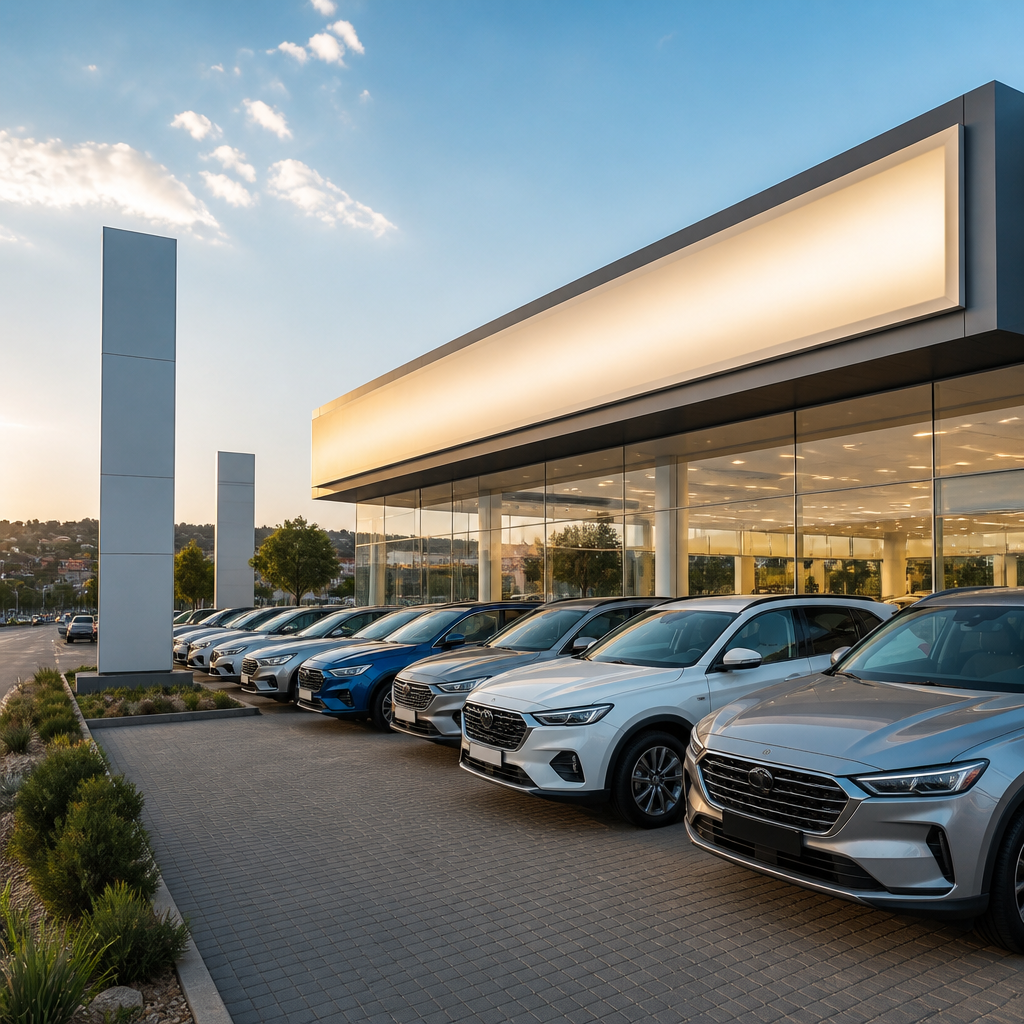
The five-second test from the approach lane
Before you approve anything, walk the approach from the direction most of your traffic comes from. Stand where a driver would first see the site and read the signage as a driver would, while the car is moving. If the brand name does not register in a single glance, the design has failed regardless of how good it looks up close.
In practice, dealers often discover that the logo reads well but the model names, price banners, and finance messages underneath it turn the fascia into a block of small text. Cut the message to the brand and one call to action. Let the showroom carry the detail.
Pro tip: Photograph the frontage from 50 metres back on the approach road using a phone at driver eye height. If you cannot read the brand name in the photo, neither can a driver at speed.
Corner sites and two-way traffic
A corner site gives you two approach directions, and most dealers only design for the busier one. Check both. A sign that faces the main road may be edge-on or hidden by a pole or tree from the side street, and that is where a large share of customers arrive from if your service department is on that side.
Two-way traffic also changes sign height and angle. Signs mounted high suit drivers in faster lanes, while lower signs and forecourt boards catch pedestrians and drivers who have already slowed. A serious street-level plan covers both heights, not just the sign with the biggest budget.
Sign Approvals and Landlord Consent in Gauteng
The approval stage is where most dealership signage projects lose weeks. Sign size, height, illumination, and the type of structure you attach it to can all trigger requirements from the local municipality, the property owner, or both. Rules vary by municipality and by sign type, so the only reliable approach is to confirm them with the relevant authority for your specific site before fabrication starts.
Many dealers treat approval as paperwork that happens after the design is finished. That order costs money. If the municipality asks for a smaller face or a different mounting method, the fabricated sign may be unusable, and a redesign reopens the brand approval process too.
What to get in writing before you fabricate
Get the approved dimensions, mounting position, and illumination specification in writing before any cutting or printing begins. Attach the signed-off drawing to that approval so there is no argument later about what was agreed. If your lease is in a shared centre or a building with other tenants, you also need written consent for changes to the facade.
Keep a simple tracker with each approval, its reference number, the person who gave it, and the date. This saves hours when a new manager takes over the site or when you open a second branch in the same region.
Where projects stall in practice
The most common delay is a landlord who was never asked. The second is a design that changes after a manufacturer or group marketing team signs off on the brand layout, which sends the file back for another round. Get the landlord and the brand owner to approve the same final drawing, not two versions of it.
Also plan for the time between application and decision. Do not schedule a launch event or a model release around a sign you have not yet been granted permission to install.
Showroom Signage That Sells the Vehicle
Once a visitor has walked through the door, the showroom signage has one job: help them decide which car to look at next. Signs that name the vehicle, its key feature, and the offer give a buyer something to act on. Signs that only repeat the brand slogan leave them to ask a salesperson the same question again.
A good test is to stand at the entrance and ask what you would need to know about the nearest vehicle without speaking to anyone. Your answer is the content for the nearest sign.
Window graphics without blocking the view
Window graphics are the most common showroom upgrade and the most often overdone. A window covered in large vinyl stops passersby from seeing the cars inside, which defeats the purpose of having a showroom at the roadside. Limit the coverage to a band at the top or bottom of the glass, and keep the central view clear.
Use perforated vinyl where you need visibility from the inside and the outside to be clear at the same time. It works well for offer messages, but test it at night, because the internal lighting decides whether the message reads from the street.
Price and finance messaging that stays current
Price and finance messages go out of date quickly, and an outdated banner damages trust faster than no banner at all. Design these signs as modular panels or printed inserts so the offer can be changed in minutes without replacing the whole structure. Set a standing review date each month so no expired offer stays on the wall.
Keep the wording factual and specific. A message that names the vehicle and the terms tells a buyer what they are being offered. Vague wording, such as "best deals ever", tells them only that the dealer is trying to sell.
Illuminated and Digital Signs for the Forecourt
Illuminated signage is what keeps a dealership visible after the sun goes down, and in the evening it is often the only sign of activity that a passing driver can see. Backlit fascias, channel lettering, and digital display boards all serve that role, but they demand more planning than a printed panel. The lighting decides how the sign reads at night, and that is when many decisions to visit are made.
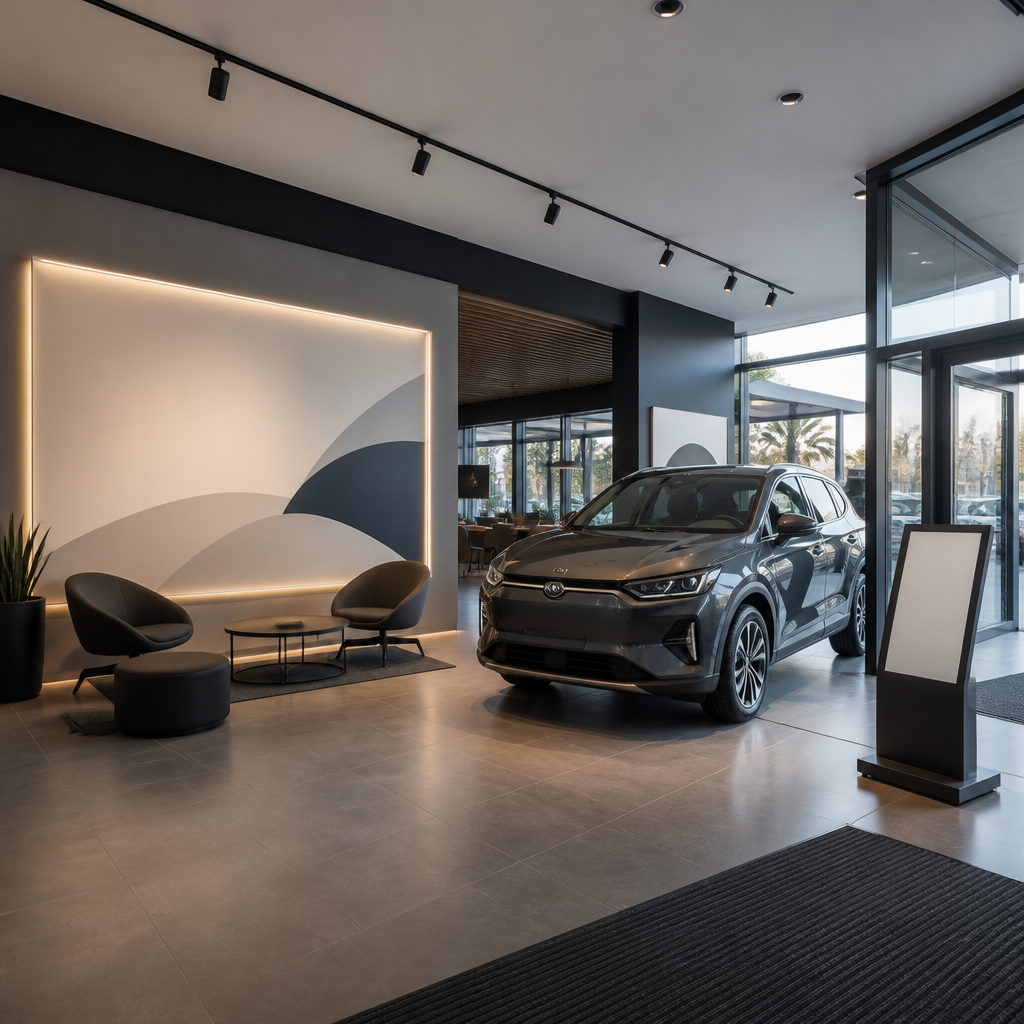
LED-backlit fascia signs and channel lettering
LED-backlit fascia signs suit brand names that need to be read from a distance. Channel lettering, where each letter is a separate illuminated unit, gives a more premium look and lets the designer control each letter's depth and glow. Both work well on a clean facade with a plain background. On a busy facade with competing signs, they can disappear into the clutter.
Choose LED modules with consistent brightness and colour across the set, and specify them on the drawing. Mismatched modules are visible immediately in the evening and make a new sign look like a repair job.
Illumination only works for you at night if it is maintained, so budget for it like a utility bill rather than a decorative extra.
Digital display boards and what they need to work
Digital display boards can rotate offers, new arrivals, and service promotions without reprinting. They also raise the stakes for power supply, content management, and screen brightness. A screen that is too bright at night dazzles drivers, and one that is too dim disappears in daylight. Set brightness controls for both day and night operation before the board goes live.
Industry guidance on digital signs for dealerships tends to focus on showrooms and waiting areas as much as the street, which is a useful reminder that a screen inside the building can often do more for a buyer already on the premises than one on the road.
Corporate Identity Standards for Dealer Groups and Franchises
For franchise dealers and multi-site groups, the brand manual is not a suggestion. It sets the logo clearance, colour values, typefaces, and placement rules that the brand owner expects to see on every site. A sign that drifts from those standards creates a problem for the franchisor, and it can create a problem for you at the next compliance review.
Corporate identity is also where dealers and sign suppliers most often disagree. Settle the standards before the first proof, not after the sign has been installed and photographed.
Who signs off the brand proof
Name one person who signs off every proof, and make sure that person has the authority to approve it. In many groups, the brand marketing team, the regional manager, and the site principal all have a view, and a proof that goes through three inboxes can take weeks. A single named approver with a clear deadline removes most of that delay.
Keep the approved PDF and the source artwork together. Printing from a low-resolution copy of the logo is a common cause of colour and edge problems that the brand team will reject.
Handling multi-site rollouts
When you roll out signage across several branches, build one template per sign type and adjust only the site-specific elements, such as address, opening hours, or local contact. Do not redesign each site from scratch. Templates make it easier to check compliance and to replace a damaged sign with an identical one months later.
Plan rollouts in batches. Installing ten sites in one month creates a maintenance and approval workload that most dealership teams cannot manage alongside sales targets.
Choosing the Right Sign Type for Each Job
No single sign type suits every dealership. The right choice depends on the site, the traffic pattern, the approval conditions, and how often the message will change. The table below compares three common approaches that dealers in this market ask about most often.
| Sign Type | Best Use Case | Main Trade-off |
|---|---|---|
| Channel lettering and illuminated fascia | Permanent brand identity on a clean facade with strong night visibility from the approach road | Higher upfront cost and more approval steps, and the lettering is hard to change once installed |
| Pylon or totem sign | Sites set back from the road, or where drivers need to see the brand from a distance over other buildings and trees | Needs enough land and a structure that will pass approval, and it adds a second visual element that must match the rest of the site |
| Digital display board | Frequently changing offers, new stock announcements, and service promotions that need updating without reprinting | Requires a stable power supply, content management, and day and night brightness settings, and it can look out of place on a heritage or low-rise facade |
Matching sign type to site and budget
For most urban dealerships, a fascia-mounted illuminated sign handles the brand identity, and a digital board or window insert handles the changing offers. A pylon makes sense when a setback site is losing drivers who simply do not see the building in time. A pylon on a site that is already visible from the road is an expensive way to repeat what the fascia already does.
Start with the most important message and the most important viewer, then choose the sign type that delivers that message to that viewer for the lowest total cost over three years, including maintenance.
Pro tip: Ask your sign supplier for a total cost comparison that includes approval fees, installation, power, and two maintenance visits. The cheapest quote often becomes the most expensive sign on the site within a year.
Maintenance, Rental, and Keeping Signs Working
A sign that works on the day it is installed can stop working within months. Lamps fail, vinyl fades, faces collect dirt, and fixings loosen in wind. Each of these problems makes the dealership look less professional, and the sign is often the first thing a visitor notices about the business.
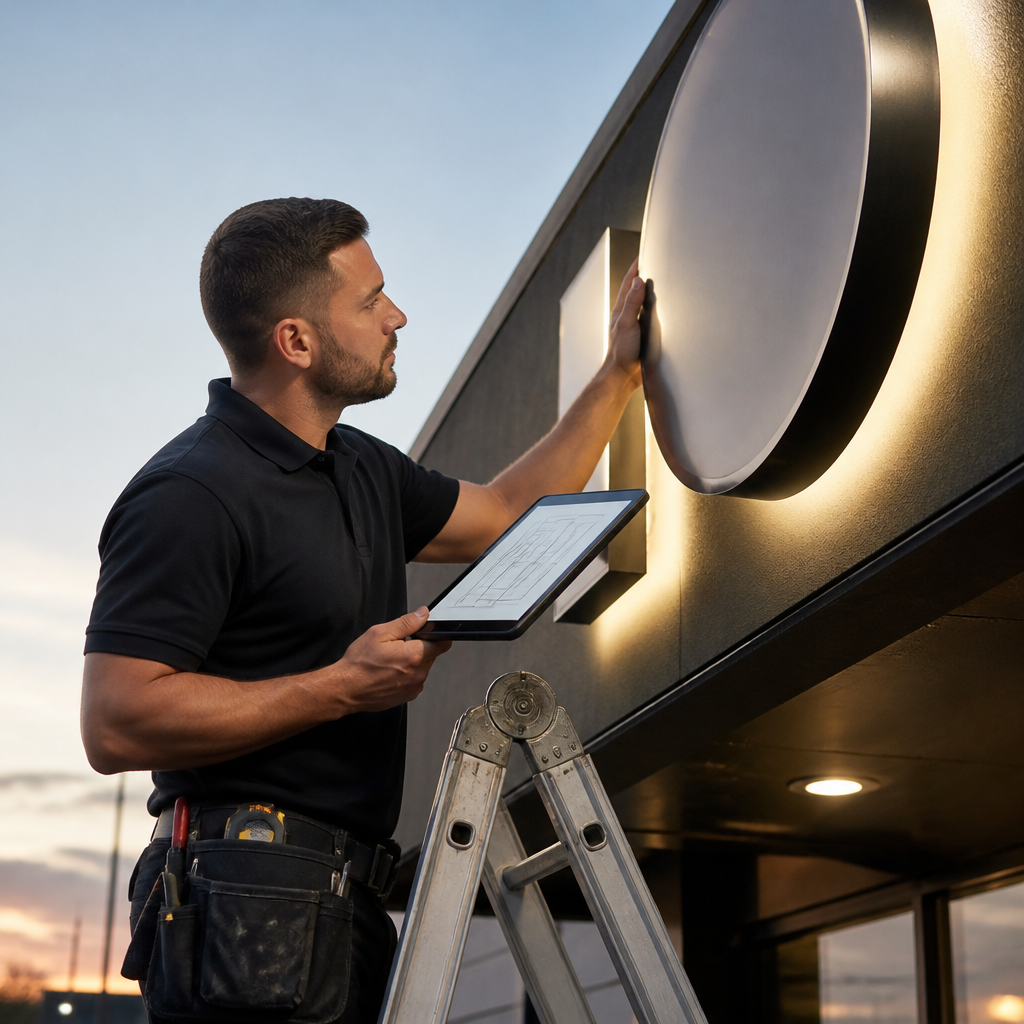
A monthly night-time walk-round
Once a month, walk the site after dark and look at every illuminated sign from the approach road. Check for dark letters, uneven brightness, flickering modules, and water inside housings. Record any defect with a date and photo, then book the repair before the next weekend, when traffic is highest.
Clean faces during the day, and check fixings during the same visit. Wind and rain loosen brackets more often than most dealers expect, and a loose sign is both a safety issue and a brand issue.
Rental for launches and temporary campaigns
Not every sign needs to be permanent. A model launch, a sales event, or a seasonal campaign may need strong visibility for a few weeks only. Renting temporary signage for those windows avoids tying up capital in a sign that will be taken down soon after. SignShopper provides rental solutions for signage across Africa, which suits dealers running short campaigns or multi-site events.
Plan rental in advance. Last-minute installation around a launch date is where mistakes and missed approvals happen.
Measuring Whether Your Signage Brings Visitors In
Signage is expensive enough that it should be judged by results. Many dealers install a new sign, see that the forecourt looks better, and assume the sign is working. That may be true, but without numbers you cannot tell whether the investment brought in buyers or simply made the site look tidier.
The aim is not perfect attribution. You are looking for a clear change that you can explain, and you want it measured the same way before and after installation.
Simple before and after tracking
Record weekly walk-ins, phone enquiries, and test drive bookings for at least four weeks before a new sign goes up. Repeat the same count for four weeks after it is live, on the same days of the week where possible. Compare the two periods and note any other events, such as a promotion or a holiday weekend, that could explain a difference.
If the numbers rise, you have a result to build on. If they stay flat, check whether the sign is visible from the approach, whether the message is clear, and whether the offer on the sign matches what the sales team is actually selling.
Using separate contact routes for signage
Give each major sign a distinct call to action, such as a short web address, a phone extension, or a QR code with a clear offer. Track which route brings in the enquiries. A sign that drives calls to a general number cannot be measured, but a sign with its own route can be judged on its results.
Review the results each quarter and retire messages that do not generate enquiries. A signage programme should change as the market and the stock change, not stay fixed for years.
Frequently Asked Questions
Do I need approval before installing a dealership sign in Gauteng?
In most cases, yes. Sign size, height, illumination, and mounting can trigger requirements from the local municipality and from your landlord. Confirm the rules for your specific site before fabrication, and get written approval for the final drawing.
What is the most important sign on a car dealership?
For most sites, the main fascia sign is the most important because it is the only sign many passing drivers will see. It should carry the brand name clearly, be readable from the approach road, and be lit well enough to work at night.
How often should dealership signs be checked?
Check illuminated signs monthly, including a night-time inspection from the approach road. Clean faces and check fixings at the same visit, and book repairs quickly, because a failed lamp or loose bracket is noticed by customers and by the brand team.
Are digital display boards worth it for a smaller dealership?
They can be, if you change offers often enough to justify the content work and the power and maintenance costs. If your offers rarely change, a printed panel or a modular insert is usually the better value.
Can I rent signage instead of buying it for a short campaign?
Yes. Rental suits launches, sales events, and seasonal campaigns that need strong visibility for a limited period. Plan the installation and approvals early, because rushed timing is where most rental projects go wrong.
Which sign on your site brings in the most walk-ins, and which one do you think is wasting money? Share your experience with dealership signage in the comments, and tell us what changed after you installed it.
References
- Best practices for using digital signs in car dealership showrooms and waiting areas
- Eight car dealership marketing strategies to review for sales growth
- Ten marketing strategies for new car dealers covering customer engagement and local search
- Review of branding strategy at the car dealer point of sale